China’s automotive supply chain includes manufacturers serving projects from early prototypes to recurring production runs. Yet finding a suitable supplier takes more than comparing prices. Cnc Auto Parts can vary in material, machining process, inspection method, and production capacity. Those differences matter when a component must fit an assembly precisely.
This guide introduces leading CNC auto parts manufacturers in China and explains what buyers should compare. Look beyond product photos. Ask about aluminum and steel machining, turning and milling equipment, tolerance control, sample approval, and documented inspections. A clear quotation should identify material grades, surface finishes, packaging, and lead times. Small details count. A poorly explained tolerance can cause trouble after parts reach the assembly line.
There is no single best factory for every project. A supplier suited to high-volume brackets may not be the right choice for complex prototypes or tight delivery schedules. Company rankings can also change with available evidence and buyer priorities. That is worth keeping in mind. Before choosing a manufacturer, verify its capabilities through current documentation, technical discussions, and representative samples. This overview offers a practical starting point, not a substitute for supplier evaluation.
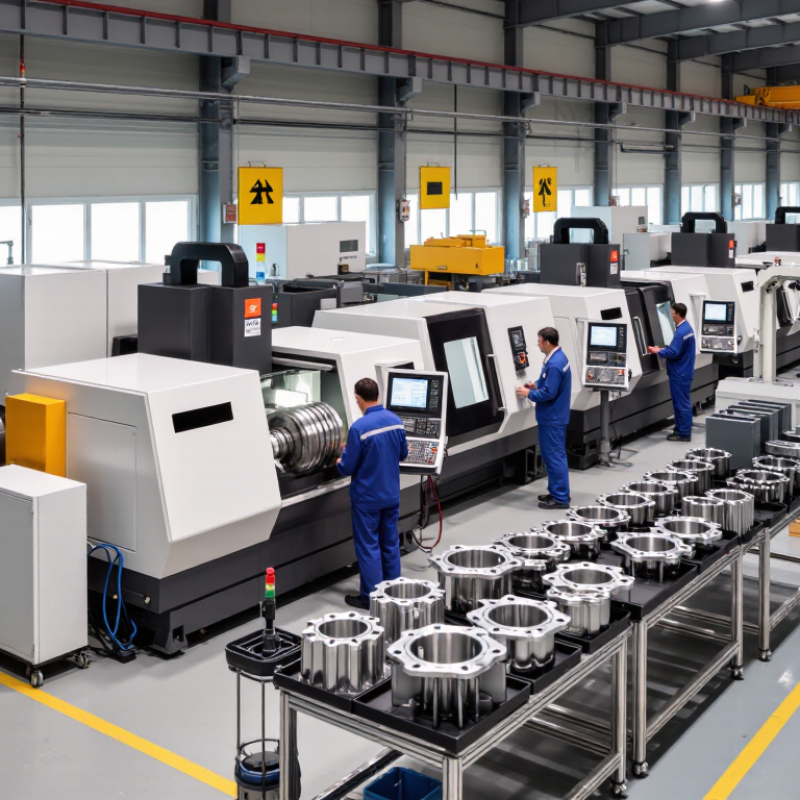
Understanding CNC auto parts manufacturing in China starts with how a part moves from drawing to production. Engineers review dimensions, material grades, and tolerance requirements before selecting milling, turning, or a combined process. A machined aluminum housing, for example, may need a flat mounting face and accurately positioned bolt holes. Small details matter.
Production often combines digital design, CNC equipment, and hands-on inspection. Shops may use coordinate measuring machines to check critical dimensions, while operators inspect surfaces for burrs or tool marks. Clear inspection records help teams trace problems to a machine setup, tool change, or material batch. Material traceability deserves attention, especially when parts must meet consistent specifications across repeat orders.
A capable manufacturer should explain its process, inspection plan, and response to design changes in plain terms. Buyers can request sample parts and compare measured results with the drawing before approving larger runs. Still, a successful sample does not guarantee every later batch will match it. That gap is easy to overlook. Tolerances that look simple on paper may raise cost or slow production, so early technical discussion can prevent avoidable rework.
A leading CNC auto parts manufacturer should show control over the whole production process, not just own modern machines. Check whether its engineers can interpret drawings, discuss tolerances, and flag features that may be difficult to machine consistently. Ask how it handles material selection and batch traceability. Clear answers matter.
Inspect the quality evidence. Request sample inspection reports, first-article results, and details about measuring equipment, such as coordinate measuring machines and calibrated gauges. For a machined aluminum housing, for example, the supplier should explain how it checks bore dimensions, surface finish, and burr removal. Small details matter. A polished sample alone proves little; repeatable records across batches are more useful.
Production capability also deserves close attention. Ask about available machine types, typical batch sizes, maintenance routines, and how urgent changes are communicated. A technically capable factory may still struggle with delivery or slow feedback. Review a sample timeline and clarify who handles drawing questions. If possible, compare stated tolerances with inspection data from real parts. No single score can capture every risk, and a checklist may miss problems that appear only after repeated orders. Verify claims with documents, sample parts, and direct technical discussion.
Chinese CNC auto parts manufacturers often differ more by production model than by size. Integrated suppliers combine turning, milling, heat treatment, and inspection under one roof. They may produce steering, transmission, or engine components from customer drawings. Their advantage is process coordination. Their challenge is keeping every stage consistent during a design change.
Precision machining specialists focus on tight-tolerance parts, such as aluminum housings, shafts, and valve bodies. In industrial clusters across eastern and southern China, many workshops use multi-axis machines and coordinate measuring equipment. Buyers should ask how suppliers control tool wear and document inspection results. A clean sample is useful, but repeatability matters more.
Export-oriented custom manufacturers often serve smaller production runs and varied specifications. They can be flexible with material choices and packaging, and may support prototype revisions. Yet communication and engineering review deserve close attention. A drawing can look clear while leaving surface finish or datum requirements uncertain. No shop is strong at everything. Comparing process records, sample measurements, and response quality gives a more reliable picture than relying on machinery lists alone.
China’s CNC auto-parts manufacturers commonly make brackets, shafts, housings, bushings, and steering or suspension components. Aluminum alloys such as 6061 and 7075 suit lightweight housings; carbon and alloy steels handle higher loads. Stainless steel and brass appear in selected fittings. Short runs matter. CAAM reported 31.282 million vehicles produced in China in 2024, a large and varied supply base—not proof that every shop can meet automotive-grade requirements.
Typical capabilities include CNC turning, three- and five-axis milling, drilling, tapping, and precision grinding. A machined aluminum housing may arrive with deburred edges, tapped holes, and anodized surfaces; steel parts may require heat treatment or protective plating. Suppliers should state achievable tolerances for the specific material, geometry, and batch size. There is no useful universal tolerance claim.
OICA recorded about 93.5 million vehicles produced worldwide in 2023, underscoring the scale behind demand for dependable components. Still, a polished capability list can hide weak process control. Ask for inspection records, material certificates, and sample measurements from a coordinate-measuring machine or calibrated gauges. These checks are less glamorous than a five-axis machine. They often reveal more.
How to Compare and Select a CNC Auto Parts Manufacturer
Compare manufacturers against the part’s real requirements, not a general capability list. Share a drawing with material, critical dimensions, tolerance ranges, and expected volume. Ask which machining process they recommend and why. A useful answer should mention setups, tooling access, and features that may affect cost or consistency. Check whether the supplier can provide sample parts and documented inspection results before full production.
Review measurement methods, too. For a precision bore, ask how it is checked and how often measurements are recorded. Confirm that inspection equipment is calibrated and that reports identify the relevant drawing dimensions. Request details on material certificates, lot tracking, and how nonconforming parts are handled. Specific answers matter.
Price is only one part of the comparison. Clarify lead times, packaging, shipping arrangements, and who will communicate when a schedule changes. If possible, compare quotations using the same drawing revision and order quantity. A low quote may omit inspection or finishing costs. No scorecard removes every risk. Even a careful process can miss a detail, so review the first sample closely and record any changes before approving repeat production.
Rather than presenting an unsupported company ranking, this comparison table outlines practical criteria for evaluating manufacturers. Capability figures are indicative only; actual performance depends on part geometry, material, machining process, inspection method, and agreed acceptance criteria.
| Comparison Dimension | What to Look For | Evidence to Request | How to Compare Suppliers |
|---|---|---|---|
| Automotive quality management | A documented quality system appropriate to the intended automotive application. IATF 16949 is an automotive quality management system standard; ISO 9001 is a general quality management system standard. | Current certificate, certification scope, issuing body, and confirmation that the proposed production site is covered. | Check the certificate’s validity and scope directly. Do not assume that a certificate guarantees a particular part’s performance. |
| Machining processes and equipment | Processes suited to the drawing, such as CNC turning, milling, multi-axis machining, drilling, tapping, and finishing operations. | Equipment list, process flow, sample parts, and an explanation of how critical features will be machined and inspected. | Compare the proposed process with the part’s geometry, tolerances, material, and production volume—not the machine count alone. |
| Dimensional capability | Ability to meet each drawing tolerance consistently. CNC machining can achieve tight tolerances, but there is no single tolerance that applies to every part or process. | First-article inspection report, measurement plan, calibrated instrument list, and capability data for critical-to-quality dimensions where available. | Compare measured results against the same drawing revision and agreed inspection method. Treat general tolerance claims as unverified until demonstrated on the part. |
| Material control | Experience with the specified grades of aluminum, steel, stainless steel, copper alloys, or engineering plastics, as applicable to the design. | Material certificates, incoming inspection records, supplier controls, and lot or heat-number traceability where required. | Confirm the exact grade, condition, and applicable material specification; similar material names do not necessarily indicate equivalent properties. |
| Inspection and measurement | Inspection resources matched to part features, potentially including micrometers, gauges, coordinate-measuring machines, and surface-finish instruments. | Inspection equipment list, calibration records, sample reports, and defined sampling frequency. | Check that the chosen method can measure the specified feature and that acceptance criteria are agreed before production. |
| Production validation | A controlled path from prototype or sample approval to repeat production, with documented process changes and nonconformance handling. | Sample approval records, control plan where applicable, process flow, and corrective-action examples with confidential details removed. | Assess whether the supplier can reproduce approved samples and manage changes without bypassing customer approval requirements. |
| Traceability and documentation | Records that connect materials, production lots, inspection results, and shipments to the applicable part and drawing revision. | Example traceability records, lot identification method, document-retention policy, and revision-control procedure. | Define the required traceability level in the purchase specification and verify it with a sample record. |
| Surface treatment and finishing | Controlled finishing options relevant to the design, such as deburring, anodizing, plating, passivation, or coating, when specified. | Process specifications, inspection criteria, subcontractor controls, and coating or finish test reports where required. | Compare the exact finish standard, thickness or acceptance criteria, appearance requirements, and responsibility for outsourced processes. |
| Capacity and lead-time planning | Available capacity for the expected order pattern, including prototype, launch, and repeat-production needs. | Written production schedule, capacity assumptions, planned working days, and contingency arrangements. | Compare lead times using the same quantities, material availability assumptions, inspection scope, and shipping terms. |
| Cost and total landed cost | A quotation that separates relevant cost drivers, including material, machining, setup, finishing, inspection, packaging, and freight. | Itemized quotation, tooling or fixture charges, minimum order assumptions, payment terms, and quoted Incoterm. | Compare like-for-like specifications and include logistics, duties, inspection, and potential rework—not unit price alone. |
| Communication and engineering support | Clear handling of drawing questions, design-for-manufacturing feedback, revision changes, and corrective actions. | Documented quotation questions, review comments, named project contacts, and response-time expectations. | Use the same technical package during evaluation and assess whether questions are specific, documented, and resolved before production. |
Check drawing reviews, material selection, traceability, inspection records, and production planning. Modern machines alone prove little.
Ask for sample inspection reports, first-article results, material certificates, and measuring-equipment details. Records across batches matter.
Ask how the supplier measures bore dimensions, surface finish, and burr removal. A polished sample is not enough.
Common processes include turning, three- and five-axis milling, drilling, tapping, and precision grinding. Capabilities vary by shop.
Aluminum alloys such as 6061 and 7075 suit lightweight housings. Carbon and alloy steels handle higher loads.
Request measurements from real parts and confirm tolerances for your material, geometry, and batch size. There is no universal figure.
Review a sample production timeline, maintenance routines, and how urgent changes are handled. Ask who answers drawing questions.
Integrated suppliers coordinate multiple processes. Specialists may focus on tight-tolerance parts, while export-oriented shops may support varied runs. No shop does everything well.
China’s Cnc Auto Parts manufacturing sector serves automotive needs through precision machining, flexible production, and a wide range of component options. Leading manufacturers can be assessed by their engineering expertise, quality-control procedures, equipment, production capacity, communication, and ability to meet agreed specifications. Notable suppliers vary in their strengths: some focus on prototypes and custom parts, while others specialize in repeat production or complex components.
Common products include shafts, housings, brackets, fittings, and other machined parts. Manufacturers may work with aluminum, steel, stainless steel, brass, and engineering plastics, using processes such as turning, milling, drilling, and finishing. When comparing suppliers, consider material traceability, dimensional accuracy, inspection methods, lead times, minimum order quantities, and after-sales support. A clear review of drawings, sample parts, production requirements, and quality expectations can help buyers identify a manufacturer suited to their project.

Haochu Machinery