Explore our flagship OEM metal parts engineered via investment casting, forging, and high-tolerance CNC machining.
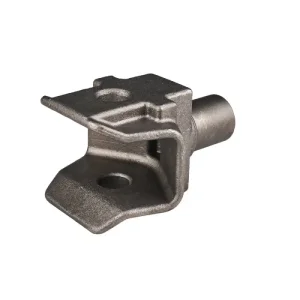
A Comprehensive Industry Report on Material Engineering, Foundry Efficiencies, and Strategic OEM Sourcing
In the contemporary industrial ecosystem, the global demand for high-reliability, custom-engineered metal components is experiencing an unprecedented structural shift. Driven by rapid advancements in automotive electrification, deep-sea oil and gas extraction, high-efficiency agricultural mechanization, and smart factory automation, procurement executives and engineering directors face dual challenges: securing ultra-tight dimensional tolerances while managing Total Cost of Ownership (TCO) across complex international supply chains.
Selecting the right Wholesale Metal Parts Supplier & Factory is no longer merely a transactional vendor decision—it is a core strategic lever. Modern heavy industries require metallurgical consistency, zero-defect quality control frameworks (such as IATF 16949 and ISO 9001:2015), rapid prototype-to-production conversion cycles, and robust surface treatment capabilities. This technical whitepaper analyzes the mechanical specifications, production methodologies, economic drivers, and supply chain strategies defining the precision metal manufacturing landscape in 2025 and beyond.
Cross-border procurement now favors integrated foundries capable of executing multi-stage production—from raw alloy melting and precision casting to 5-axis CNC finishing and anti-corrosion coating—under a single quality management system.
Automotive powertrains and high-pressure hydraulic systems mandate dimensional precision up to ±0.02mm. Achieving this requires advanced CMM verification, non-destructive testing, and controlled silica sol investment casting.
Environmental regulations necessitate closed-loop sand recovery, energy-efficient electric induction melting, and low-VOC surface finishing methods (such as E-coating and phosphating) across export-oriented foundries.
Operational Capabilities, Precision Metrics, and Engineering Infrastructure

Established in 2013, Ningbo Yinzhou Haochu Machinery Manufacturing Co., Ltd. has developed into a premier manufacturing enterprise specializing in advanced investment casting, hot precision forging, and automated CNC machining. Situated in the heart of China’s metallurgical equipment manufacturing hub (Ningbo, Zhejiang), the company operates an integrated infrastructure designed for high-spec industrial applications.
Comparative Evaluation of Casting, Forging, and Machining Technologies for Industrial Applications
Achieving optimal mechanical performance in metal parts requires aligning component geometry, stress load profiles, and operational environments with the correct production methodology. Below is a comprehensive engineering comparison of the primary manufacturing technologies deployed at Haochu Machinery.
| Manufacturing Process | Dimensional Accuracy | Surface Roughness (Ra) | Material Grain Structure | Best Suited Application |
|---|---|---|---|---|
| Silica Sol Investment Casting | ±0.05mm to ±0.1mm (ISO 8062 CT4-CT6) | 1.6 – 3.2 µm | Equiaxed fine grain; excellent isotropic properties | Complex thin-walled geometry, valve bodies, turbine parts, custom molds |
| Precision Die Forging | ±0.15mm to ±0.3mm | 3.2 – 6.3 µm | Continuous directional grain flow; maximum tensile strength | High-stress structural components, oil pipeline unions, tractor axles |
| Multi-Axis CNC Machining | Up to ±0.02mm | 0.4 – 1.6 µm | Determined by parent bar/billet stock | High-tolerance bores, threaded fittings, automotive hydraulic spools |
| Composite Casting & Forging | ±0.05mm after machining | 0.8 – 1.6 µm | Dual-phase optimization; high density core with net-shape shell | Heavy-duty tractor accessories, specialized pipeline components |
Unlike conventional sand casting or water glass casting, the Silica Sol investment process uses ethyl silicate binder systems to yield ultra-smooth ceramic molds. This eliminates gas porosity and produces near-net-shape components in alloy steel, stainless steel, and ductile iron, drastically reducing subsequent machining requirements.
Utilizing high-tonnage friction presses, precision forging realigns the internal crystal grain structure along the stress axes of the part. This process yields superior impact resistance and fatigue strength, making it the industry standard for high-pressure oil pipeline unions and structural agricultural tractor links.
High-precision casting and forging blanks undergo secondary processing across CNC lathe banks and vertical machining centers. Sub-micron precision grinding, internal thread tapping (such as 2" UNC pipeline threads), and automatic deburring ensure perfect assembly interchangeability.
Why Global OEMs Partner with Ningbo Metallurgical Ecosystems
Located in close proximity to Ningbo-Zhoushan Port—the world’s largest port by cargo tonnage—our facility minimizes inland freight friction. The Yangtze River Delta region hosts an unrivaled concentration of raw material steel mills, specialized heat treatment facilities, certified plating shops, and tooling dye shops. This ecosystem allows Haochu Machinery to compress production lead times by up to 35% compared to western counterparts.
Rapid product iteration is vital in modern OEM engineering. By integrating 3D CAD/CAM software, MAGMA casting simulation software, and rapid aluminum-alloy mold machining, Haochu delivers fully functional prototype samples within 7 to 12 days. Multi-size, multi-process sampling can be executed simultaneously, enabling procurement engineering teams to validate fit and performance without costly schedule delays.
Custom Engineering Solutions Tailored to High-Stress Operating Environments
Engineered engine brackets, steering knuckles, control arms, and transmission hubs. Utilizes high-tolerance grinding and Electrophoretic Deposition (E-coating) for 1,000+ hours of salt spray corrosion resistance.
Forged steel unions, 2" UNC threaded pipe connectors, and LCC alloy steel valve bodies designed for low-temperature, high-pressure environments. Zero-leakage performance under hydrostatic test pressures.
High-strength 6061-T6 aluminum CNC components and forged alloy steel tractor accessories. Built to withstand abrasive soil contact, dynamic mechanical impact, and extreme weather exposure.
Robotic arm linkages, pneumatic cylinder bodies, and custom zinc-plated mounting flanges designed for continuous high-speed duty cycles with minimal thermal expansion.
Ensuring ISO 9001 Compliance, Zero-Defect Delivery, and Full Traceability
Every heat of molten metal undergoes optical emission spectrometry before pouring. Material Test Reports (MTR) verifying chemical composition (Carbon, Manganese, Chrome, Nickel, Molybdenum) and mechanical properties are generated for full lot traceability.
During CNC machining, First Article Inspection (FAI) is enforced. Automated air gauges, thread plug gauges, and digital calipers monitor critical dimensions. Machine operators perform statistical process control (SPC) sampling every 30 minutes.
10 senior quality inspectors perform 100% surface audit, 3D Coordinate Measuring Machine (CMM) dimensional verification, ultrasonic thickness testing, magnetic particle crack detection, and coating thickness evaluation prior to export packaging.
Intelligent Foundries, Carbon Neutrality, and Hybrid Manufacturing Workflows
The precision metal component industry is undergoing rapid digital transformation. Leading foundries are integrating Smart Industry 4.0 paradigms to meet strict global environmental guidelines and increasingly complex design geometries:
Key Technical Criteria for Evaluating Wholesale Metal Parts Suppliers
Ensure the factory provides EN 10204 3.1 chemical and mechanical test certificates for every batch. Verify that heat numbers are physically stamped or laser-etched onto high-pressure castings and forgings.
Confirm that tooling dies remain 100% customer property with lifetime maintenance guarantees. Look for low MOQs and fast prototype turnaround times (7-12 days) to support engineering changes.
Avoid multi-vendor risks by partnering with suppliers offering integrated in-house CNC machining, phosphating, zinc plating, thermal treatment, and protective powder coating under one roof.
Verify ISO 9001 certification, CMM measurement capabilities, and standard return policies for out-of-spec parts. Aim for documented qualification rates exceeding 99.5%.
Technical & Operational Insights for OEM Component Procurement
Browse additional custom-machined, forged, and silica sol cast industrial parts.
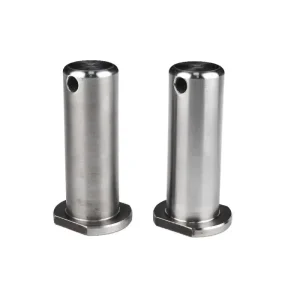
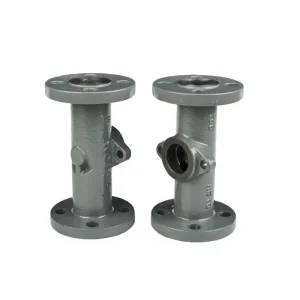
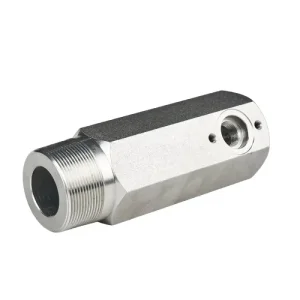
 Haochu Machinery