2026 Top Cast Metal Parts Manufacturers for Global Buyers

Time:2026-09-21 Author:Amelia
0%

Choosing reliable Cast Metal Parts manufacturers in 2026 requires more than comparing prices or polished websites. Global buyers need evidence from real production environments, including furnace records, mold maintenance, inspection reports, and shipment histories. This guide introduces leading suppliers through practical criteria such as casting capability, material control, dimensional accuracy, quality systems, and export experience.

The strongest manufacturers usually explain their process clearly. They can discuss sand casting, investment casting, die casting, or gravity casting without hiding important limitations. Buyers should look for traceable alloys, controlled pouring temperatures, documented heat treatment, and inspection equipment such as CMM systems or spectrometers. Certifications, including ISO 9001 or IATF 16949, can support confidence, but certificates alone do not guarantee consistent parts. A factory tour, production sample, or independent inspection may reveal more.

Details matter.

This overview considers manufacturers serving automotive, machinery, energy, construction, and industrial equipment markets. It also examines tooling support, minimum order quantities, engineering communication, packaging, lead times, and after-sales responsiveness. These factors often determine whether a supplier performs well beyond the first quotation. However, no ranking is perfect. Market conditions change, factory capacities shift, and public information may remain incomplete. Buyers should validate current capabilities before signing contracts, especially when parts require tight tolerances or safety-related performance. The goal is not to promote a single supplier, but to provide a balanced starting point for responsible sourcing decisions. A careful buyer still asks difficult questions. That is where reliability begins.
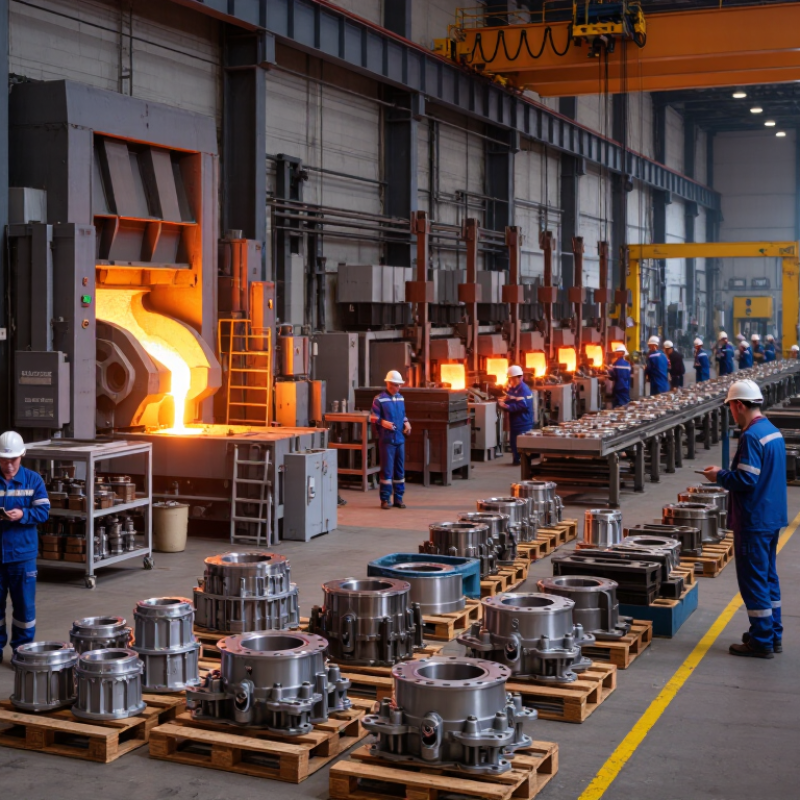
2026 Top Cast Metal Parts Manufacturers for Global Buyers

What Defines a Leading Cast Metal Parts Manufacturer in 2026

What Defines a Leading Cast Metal Parts Manufacturer in 2026

A leading manufacturer combines stable metallurgy with visible process control. The World Casting Census, published by Modern Casting in 2024, reports global casting production above 180 million tonnes annually. That scale increases buyer risk when suppliers cannot explain furnace records, alloy chemistry, or mold variations. Strong manufacturers provide heat numbers, batch traceability, and inspection records with every shipment. They also control sand moisture, pouring temperature, and solidification time. Small deviations can create porosity inside a housing that looks perfect outside.

Quality evidence must extend beyond an ISO certificate. The ISO Survey records more than one million ISO 9001 certificates worldwide, yet certification alone proves little. Buyers should request capability studies, dimensional reports, and corrective-action history. A serious supplier can discuss Cpk results, coordinate measuring machines, and industrial computed tomography for hidden defects. On production floors, clear gauges and labeled quarantine areas reveal practical discipline. It is less impressive than polished presentations, but more useful.

Energy performance now affects procurement decisions. The International Energy Agency identifies heavy industry as a major source of global energy-related emissions. Efficient melting, recycled feedstock, and measured furnace consumption therefore matter commercially and environmentally. I would still question any supplier claiming zero defects or perfect delivery. Real production has variation. The trustworthy manufacturer discloses it, explains the response, and improves the process with evidence.

Key Casting Processes and Materials Used in Metal Part Production

Choosing a casting process starts with geometry, production volume, tolerance, and service temperature. The World Foundry Organization’s 2023 Census reported roughly 109 million tonnes of global castings production in 2022. That scale reflects diverse requirements, from heavy machinery housings to small fluid-control components.

Green sand casting suits large parts and frequent design changes. It uses reusable patterns and relatively low tooling costs. Die casting delivers thin walls and consistent dimensions for high-volume aluminium or zinc parts. Investment casting handles intricate passages, tight radii, and heat-resistant alloys. Centrifugal casting remains effective for pipes, rings, and other rotational components. None is universally best.

Material selection changes the process window. Ductile iron offers strength and vibration control for brackets, hubs, and industrial frames. Carbon and alloy steels tolerate higher loads and temperatures, but they demand careful melt chemistry and heat treatment. Aluminium alloys reduce weight and support rapid die-casting cycles. The International Aluminium Institute reported more than 72 million tonnes of primary aluminium production in 2024, reinforcing its industrial importance.

Copper alloys support electrical conductivity and corrosion resistance. Magnesium can reduce mass further, though handling and process controls become stricter. Production reviews often reveal an overlooked issue: a material may meet the drawing but fail during machining or inspection. Wall thickness, shrinkage allowances, porosity, and gating need review before tooling begins. Small errors become expensive quickly.

Regional Overview of Top Cast Metal Parts Manufacturers

Regional Overview of Top Cast Metal Parts Manufacturers

Asia remains the largest production base for cast metal parts. The World Foundry Organization’s 2023 census reported approximately 109 million tonnes of global castings in 2022. Asia contributed nearly three quarters of that volume. China leads in scale, while India, Japan, South Korea, and Southeast Asia support strong automotive, machinery, and infrastructure demand. Factory visits often reveal automated molding lines beside manual finishing stations. That mix can affect consistency.

Europe emphasizes engineering precision and traceability. Germany, Italy, Poland, and Türkiye maintain strong foundry networks for industrial equipment, vehicles, and energy systems. The European Foundry Association reports that European casting remains closely tied to automotive and mechanical engineering production. Buyers should inspect alloy certificates, dimensional reports, and furnace records. Paperwork matters.

North America offers shorter supply routes for many regional buyers. The United States and Mexico support substantial aluminum, iron, and steel casting capacity. The U.S. Geological Survey reported global aluminum smelter production above 70 million tonnes in 2024, reflecting sustained demand for lightweight components. However, raw-material availability does not guarantee reliable parts. Tooling control, heat treatment, and inspection capacity still decide final performance.

Regional comparisons can be misleading. A lower quoted price may hide longer tooling approval or weaker process controls. I would request sample castings, CT or radiographic inspection where necessary, and clear defect limits. Some suppliers will resist this level of detail. That hesitation deserves careful review.

2026 Top Cast Metal Parts Manufacturers for Global Buyers

Regional Overview Based on 2023 Crude Steel Production as an Industrial Manufacturing Base Indicator

Asia and Oceania represented the largest upstream industrial base in 2023, followed by the European, North American, and CIS regions. Higher steel production can indicate stronger availability of foundries, metalworking infrastructure, and related supply-chain capacity, but it does not directly measure cast metal parts output. Source: World Steel Association, 2023 crude steel production statistics.

How Global Buyers Should Compare Suppliers and Capabilities

2026 Top Cast Metal Parts Manufacturers for Global Buyers

Global buyers should compare evidence, not polished capability lists. The World Foundry Organization’s 2023 Census reported about 109.7 million tonnes of castings produced worldwide in 2022. That scale makes supplier selection more complex. A manufacturer may excel at ductile iron but lack stable aluminum high-pressure die casting. Ask for process-specific records, not general claims.

Review alloy grades, casting methods, machine capacity, tooling ownership, and annual volume ranges. For dimensional control, request capability studies, inspection plans, and sample reports showing actual Cpk results.

Verify whether laboratories use calibrated equipment and traceable standards. Material certificates should connect clearly to heat numbers and shipment records. This small detail often exposes weak control.

Do not judge quality from a low quotation alone. Tooling changes, scrap rates, packaging, and freight can alter the real cost. Request recent evidence for porosity testing, tensile strength, surface finish, and corrective-action response. Independent audits add confidence, but they are not perfect.

I would also compare communication during a technical review; slow, vague answers can predict production delays. The U.S. Department of Energy’s 2022 Bandwidth Study identifies metal casting as an energy-intensive manufacturing process, so buyers should examine furnace efficiency and recycled-content practices where relevant. Sustainability claims need measured data.

A practical scorecard should weigh capability, repeatability, risk, service, and total landed cost—not just price.

Quality, Certification, Pricing, and Export Considerations

2026 Top Cast Metal Parts Manufacturers for Global Buyers

Quality, Certification, Pricing, and Export Considerations

Choosing a cast-metal partner in 2026 requires more than comparing unit prices. The 2024 World Casting Census reported global casting output at roughly 110 million tonnes in 2023. That scale hides differences in tooling control, melt chemistry, and inspection discipline. Ask for process capability data, not attractive photographs. A reliable supplier can provide spectrometer records, tensile results, dimensional reports, and heat-to-shipment traceability.

Certification is useful, but it is not magic. The ISO Survey 2023 counted about 1.27 million ISO 9001 certificates worldwide. Verify the certificate scope, issuing body, expiry date, and audited production site. For pressure-related or safety-critical parts, request material standards and non-destructive testing procedures. A common buyer error is accepting a certificate covering administration only. That weakens confidence.

Pricing should include tooling amortization, scrap allowance, machining, packaging, duties, and freight. The World Bank Logistics Performance Index 2023 compared 139 economies across customs, infrastructure, and delivery performance. Request Incoterms, lead-time assumptions, insurance responsibility, and a landed-cost worksheet. A cheaper quote may conceal rework or port delays. Recheck every assumption. Forecast volumes may also be wrong, so negotiate tooling ownership and revision terms before approval.

FAQS

How should a manufacturer choose a casting process?

Review part geometry, production volume, tolerance, and service temperature. Green sand casting suits large parts and frequent design changes. Die casting supports thin walls and high-volume aluminium or zinc parts. Investment casting handles intricate passages and tight radii. No process is perfect.

When is green sand casting a practical choice?

It works well for large housings, brackets, and industrial frames. Reusable patterns help control tooling costs. Design changes are usually easier to manage. Surface finish may require extra machining. That trade-off is easy to underestimate.

What advantages does die casting provide?

Die casting produces thin walls and consistent dimensions. It suits high-volume aluminium or zinc components. Shorter cycles can reduce unit costs. Tooling approval may take longer than expected. Cheap is not always cheap.

Why would a designer use investment casting?

Investment casting suits intricate passages, tight radii, and complex shapes. It can process heat-resistant alloys. This method may reduce assembly by combining several features. However, tooling and inspection can become expensive. Small details still need realistic tolerances.

Which materials are common for strong cast parts?

Ductile iron provides strength and vibration control. It suits hubs, brackets, and industrial frames. Carbon and alloy steels tolerate higher loads and temperatures. They require careful melt chemistry and heat treatment. Strength alone is not enough.

When are aluminium, copper, or magnesium alloys useful?

Aluminium alloys reduce weight and support rapid production cycles. Copper alloys offer electrical conductivity and corrosion resistance. Magnesium can reduce mass further. Its processing controls are stricter. Lighter is not automatically better.

What should buyers check before approving casting tooling?

Review wall thickness, shrinkage allowances, porosity risks, and gating design. Confirm machining areas and inspection requirements early. Request alloy certificates, dimensional reports, and furnace records. Sample castings can expose problems before full production. Paperwork matters.

How do regional supplier differences affect purchasing decisions?

Production capacity, delivery routes, and engineering strengths vary by region. Some factories combine automated molding with manual finishing. That mix can affect consistency. A lower quote may hide slower approvals or weaker controls. I would request inspection evidence before committing.

Conclusion

The 2026 market for Cast Metal Parts is shaped by manufacturers that combine advanced production technology, reliable engineering, consistent quality, and responsive global service. Leading suppliers typically offer processes such as sand casting, investment casting, die casting, and permanent mold casting, using materials including aluminum, iron, steel, copper alloys, and other performance-focused metals. Their capabilities may cover tooling design, prototype development, machining, surface treatment, inspection, and volume production, allowing them to support diverse industrial applications.

For global buyers, comparing suppliers requires more than evaluating unit prices. Important factors include manufacturing capacity, dimensional accuracy, material traceability, quality management systems, relevant certifications, testing procedures, lead times, packaging, and export experience. Regional differences in labor, infrastructure, logistics, and technical expertise can also affect overall value. A well-qualified manufacturer should provide clear quotations, transparent production schedules, dependable communication, and flexible customization options. By assessing quality, certification, pricing, delivery reliability, and after-sales support together, buyers can select a long-term casting partner that balances performance, cost efficiency, and supply-chain stability.


Amelia

Amelia

Amelia is a seasoned marketing professional with a wealth of expertise in our company’s core offerings. With an unwavering passion for driving growth and innovation, she plays a pivotal role in shaping our marketing strategies and enhancing brand visibility. A key aspect of her responsibilities......