Choosing the best China Casting Mold Parts requires more than comparing prices on a supplier website. Mold performance depends on steel grade, machining accuracy, heat treatment, surface finish, and production conditions. A part that works well for one mold may fail in another.
Experienced mold engineers usually begin with the application. They examine cavity pressure, injection material, cycle time, cooling requirements, and expected service life. For example, a guide pin must maintain stable alignment through repeated opening and closing. A poorly finished ejector sleeve can create friction, scratches, or inconsistent ejection.
Material selection matters greatly. Hardened tool steel can support demanding production, while pre-hardened steel may suit lower-volume projects. Corrosion-resistant materials are valuable when processing moisture-sensitive or chemically aggressive plastics. However, stronger steel is not always the best choice. It may increase machining difficulty and cost.
Small details matter.
Reliable Chinese manufacturers should provide inspection records, material certificates, dimensional reports, and clear tolerance information. Buyers should also review sample quality, production equipment, communication speed, and experience with similar molds. Factory audits or video inspections can reveal practical details, such as storage conditions and measurement procedures.
Cost still matters, but the lowest quotation can hide expensive risks. Delays, premature wear, and repeated adjustments may cost more than a higher-quality component. Lead time should include manufacturing, inspection, packaging, and transportation.
There is no perfect supplier for every project. Even careful specifications may miss real production issues. A trial order, technical discussion, and documented quality agreement can reduce uncertainty. The best decision balances performance, reliability, delivery control, and long-term value rather than selecting Casting Mold Parts by price alone.
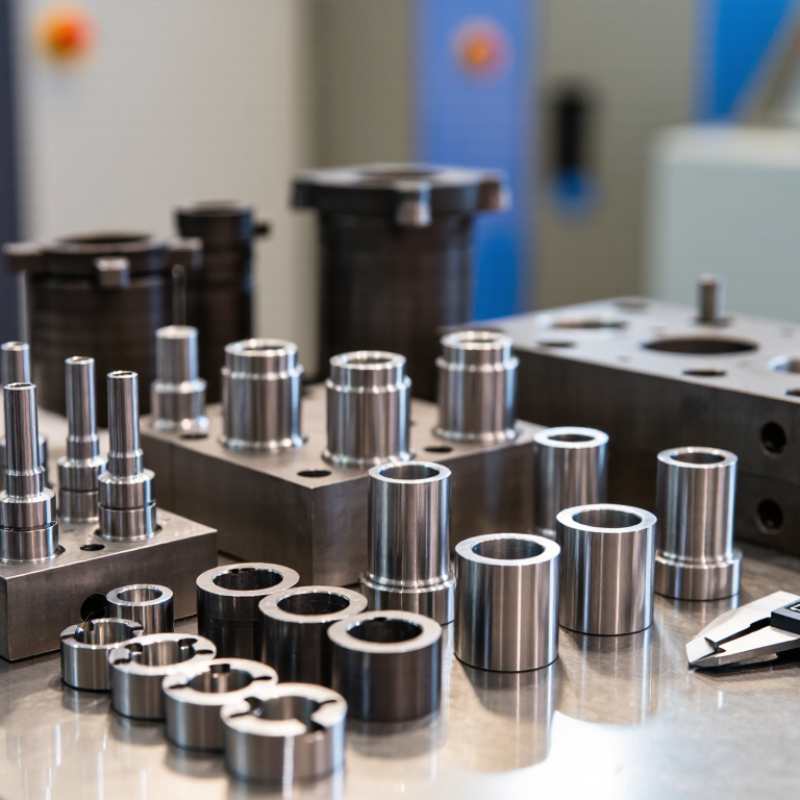
China casting mold parts are the replaceable and supporting components used inside casting molds. They include mold bases, inserts, cores, slides, ejector pins, guide pillars, bushings, and cooling fittings. During production, these parts control cavity shape, metal flow, alignment, release, and heat removal. A tiny mismatch may cause flash, porosity, sticking, or uneven dimensions. The finished casting often reveals the hidden condition of the mold.
When choosing China casting mold parts, begin with the casting material, operating temperature, pressure, and expected production volume. Hardened tool steel may suit repeated cycles, while simpler alloys can work for limited production. Confirm critical dimensions, surface finish, hardness, and heat-treatment records. Ask for inspection reports, material certificates, and clear revision control. These documents make quality easier to verify, not merely promise.
I used to judge parts mainly by price. That was too simple. A low-cost ejector pin can wear quickly and stop an entire mold. Check tolerances at functional areas, especially guide holes, shut-off surfaces, and sliding faces. Request sample measurements before full production. Reliable suppliers should discuss manufacturability and admit possible weaknesses. Some drawings are incomplete, and that problem deserves attention before machining begins. Small details matter.
A practical comparison of common casting mold parts, material options, performance requirements, and inspection points for selecting reliable components.
| Part or Selection Dimension | Primary Function | Common Material Options | Typical Selection Data | Key Quality Checks | Why It Matters |
|---|---|---|---|---|---|
| Mold Base and Plates | Supports the mold assembly and maintains alignment between mold halves. | Pre-hardened tool steel, alloy steel, or corrosion-resistant steel where required. | Flatness and parallelism are commonly specified according to mold size and application. Precision assemblies may require low hundredths-of-a-millimeter control. | Plate flatness, parallelism, squareness, thread quality, dowel-hole position, and surface damage. | A rigid and accurately aligned base helps prevent flash, uneven wear, and parting-line mismatch. |
| Cavity and Core Inserts | Form the external and internal geometry of the cast component. | H13-type hot-work tool steel for elevated-temperature service; P20-type steel for general tooling; corrosion-resistant tool steel for demanding environments. | Material choice depends on casting temperature, production volume, thermal cycling, and required surface finish. Hardened inserts are used when wear resistance is a priority. | Dimensional inspection, hardness, polishing quality, venting condition, radii, draft angles, and cooling-channel position. | These parts directly define product dimensions, surface quality, and service life of the mold. |
| Guide Pins and Bushings | Guide the mold halves into the correct position during closing and opening. | Hardened tool steel, bearing steel, or wear-resistant alloy steel. | Running clearance must be matched to the pin and bushing diameter, lubrication method, temperature, and mold size. Exact clearance should be confirmed by the mold designer. | Concentricity, straightness, hardness, surface finish, fit, lubrication grooves, and smooth movement without binding. | Accurate guiding protects cavity surfaces and reduces parting-line offset and premature wear. |
| Ejector Pins and Sleeves | Remove the solidified casting from the cavity without excessive deformation. | Hardened tool steel, nitrided steel, or wear-resistant alloy steel. | Pin diameter, length, tip geometry, and quantity are selected according to ejection force, casting shape, wall thickness, and available ejector area. | Diameter tolerance, straightness, tip flatness, hardness, surface finish, and freedom from burrs. | Correctly selected ejector parts reduce sticking, ejector marks, bending, and casting distortion. |
| Sprue Bushings and Nozzles | Direct molten metal from the injection or pouring system into the runner or cavity. | Hot-work tool steel, tungsten-alloy materials, or specialized high-temperature materials. | Bore profile, inlet radius, outlet diameter, and thermal resistance must match the casting machine and metal-flow system. | Bore dimensions, concentricity, surface finish, heat checking, erosion, and sealing contact. | Proper flow control helps reduce turbulence, cold shuts, incomplete filling, and metal leakage. |
| Runner and Gate Inserts | Control the direction, speed, and distribution of molten metal before it enters the cavity. | Hot-work tool steel, hardened alloy steel, or wear-resistant inserts for abrasive alloys. | Gate thickness, runner cross-section, transition radius, and gate location are determined by alloy type, casting geometry, filling time, and required appearance. | Profile accuracy, edge sharpness, polishing, alignment, erosion resistance, and removal of machining burrs. | Correct gating improves filling balance and can reduce porosity, air entrapment, and excess trimming work. |
| Venting Components | Allow trapped air and gases to escape from the mold cavity during filling. | Machined steel vents, vent inserts, porous metal inserts, or replaceable vent components. | Vent depth and width depend on alloy, process pressure, mold design, and the required gas-flow capacity. Dimensions must remain small enough to limit flash. | Vent cleanliness, depth consistency, flash control, gas-flow path, and resistance to clogging. | Effective venting helps reduce gas porosity, burn marks, incomplete filling, and unstable casting quality. |
| Cooling Components | Remove heat and control mold temperature during repeated casting cycles. | Steel mold plates with drilled channels, copper-alloy inserts, baffles, plugs, and seals. | Channel diameter, spacing, flow rate, and temperature are selected according to heat load, wall thickness, cycle time, and allowable thermal gradients. | Leak testing, channel position, blockage, sealing condition, corrosion, and temperature uniformity. | Stable cooling improves cycle consistency, reduces thermal fatigue, and helps control shrinkage and warpage. |
| Locks, Latches, and Locating Components | Maintain the designed relationship between mold sections and resist lateral movement. | Hardened alloy steel, tool steel, and wear-resistant locating materials. | Load capacity, locating accuracy, contact area, and wear allowance should be matched to mold mass and clamping conditions. | Contact pattern, alignment, hardness, fastener security, wear, and repeatability after assembly. | Reliable locating components help prevent offset, mold damage, and inconsistent parting lines. |
| Surface Treatment and Coating | Improve wear resistance, corrosion resistance, release performance, or thermal performance. | Nitrided steel, polished tool steel, chrome-treated surfaces, or other process-compatible treatments. | Treatment selection depends on alloy abrasiveness, operating temperature, lubrication, release requirements, and the permitted dimensional change. | Coating thickness, adhesion, hardness, uniformity, edge coverage, cracks, and post-treatment dimensions. | A suitable treatment can extend service life and reduce sticking, soldering, corrosion, and maintenance frequency. |
| Supplier and Documentation Criteria | Ensure that replacement or newly manufactured parts are traceable and compatible with the mold design. | Material certificates, heat-treatment records, inspection reports, and controlled production documentation. | Confirm 2D drawings, 3D models, revision level, steel grade, hardness range, tolerance requirements, sample approval method, and packaging specifications before production. | Dimensional report, material traceability, hardness report, visual inspection, fit verification, and revision control. | Clear documentation reduces interchangeability problems, rework, delays, and uncertainty during maintenance. |
| Selection principle: Choose casting mold parts by evaluating the casting alloy, operating temperature, production volume, dimensional requirements, cooling and venting design, expected wear, maintenance method, and compatibility with the existing mold assembly. Numerical tolerances should always be finalized from the approved engineering drawing and process requirements. | |||||
They are replaceable or supporting components inside casting molds. Common examples include mold bases, inserts, cores, slides, pins, pillars, bushings, and cooling fittings. They control cavity shape, alignment, metal flow, release, and heat removal. Small details matter.
A tiny mismatch can create flash, porosity, sticking, or uneven dimensions. The finished casting often reveals hidden mold problems. Poor alignment may leave visible parting lines or unstable dimensions. Inspect functional surfaces carefully.
Review the casting material, operating temperature, pressure, and production volume. Hardened tool steel may suit repeated cycles and demanding conditions. Simpler alloys may work for limited production. The cheapest option is not always suitable.
Request material certificates, heat-treatment records, inspection reports, and controlled drawing revisions. Ask for clear dimensional results from actual samples. Documents make quality easier to verify. Promises alone are weak evidence.
Ask the supplier to explain shrinkage, draft angles, machining allowance, and steel selection. Request a trial part before approving full production. Check flash, surface finish, hardness, and dimensional stability. Technical answers should be practical, not polished slogans.
Check guide holes, shut-off surfaces, sliding faces, locating pins, inserts, and parting surfaces. Use coordinate measuring equipment for critical dimensions. Inspect surfaces under angled light for cracks, burrs, and grinding marks. Look closely.
No. Certifications can show process control, but they cannot prove perfect mold accuracy. Review calibration records and actual inspection results. Ask how nonconforming parts are isolated and corrected. Paperwork needs technical support.
It should confirm smooth movement, correct clearance, stable alignment, and reliable release. Repeat the movement for several cycles. Watch for sticking, scraping, or unexpected gaps. I once trusted first approval too quickly. Assembly exposed a problem later.
Request three measurement samples from different production stages. Match serial numbers with inspection reports. Photograph critical areas before shipment. Keep one approved reference part for comparison. Small inconsistencies become expensive delays.
Choosing the best China Casting Mold Parts requires more than comparing product prices. These components play a critical role in shaping accuracy, production efficiency, service life, and final casting quality. Buyers should first evaluate the materials used, including their strength, wear resistance, heat tolerance, and compatibility with the intended casting process. Manufacturing standards, dimensional precision, surface finish, and consistency between batches are also essential factors when selecting reliable parts.
Supplier capability is equally important. Assess their technical experience, quality control procedures, inspection equipment, and relevant certifications before placing an order. Compare quotations by considering total value, not only the unit cost, and review lead times, minimum order quantities, engineering support, and customization options. Before approval, request drawings or samples and verify dimensions, hardness, surface condition, fit, and performance through systematic inspection. A clear checklist and effective communication can help ensure that the selected Casting Mold Parts meet production requirements and deliver stable, long-term results.

 Haochu Machinery