Choosing the right Sand Casting Mold in 2026 demands more than comparing prices or copying an older production setup. The mold must match the alloy, part geometry, surface requirements, batch size, and available equipment. A thin aluminum housing behaves differently from a thick iron valve body. The mold must survive the heat.
John Campbell, a respected casting researcher and author, stated, “The quality of a casting is determined by the quality of the liquid metal.” His observation remains highly relevant. Even an excellent mold cannot correct poor melt cleanliness, unstable pouring temperature, or careless filling practice. Mold selection and process control must work together.
Start with the material. Green sand offers flexibility and lower tooling costs for many jobs. Resin-bonded sand can support larger castings and sharper details, but it requires stronger process discipline. Ceramic molds may deliver finer surfaces, although their cost and handling demands can restrict production. Inspectors should also examine mold strength, permeability, dimensional stability, ventilation, and compatibility with automated handling.
Details matter.
A narrow vent can trap gas near a rib. Excess moisture can create blowholes. A weak mold may erode when metal enters too quickly. These failures are not always caused by the mold alone, which makes diagnosis difficult. Sometimes, the most expensive choice is the one selected without trial data.
This guide will compare practical mold options, explain current selection criteria, and identify warning signs before production begins. No mold choice is perfect. The reliable choice is the one supported by testing, measured results, and honest review of previous defects.
How to Choose the Right Sand Casting Mold in 2026?
What a Sand Casting Mold Is and How It Shapes the Final Part
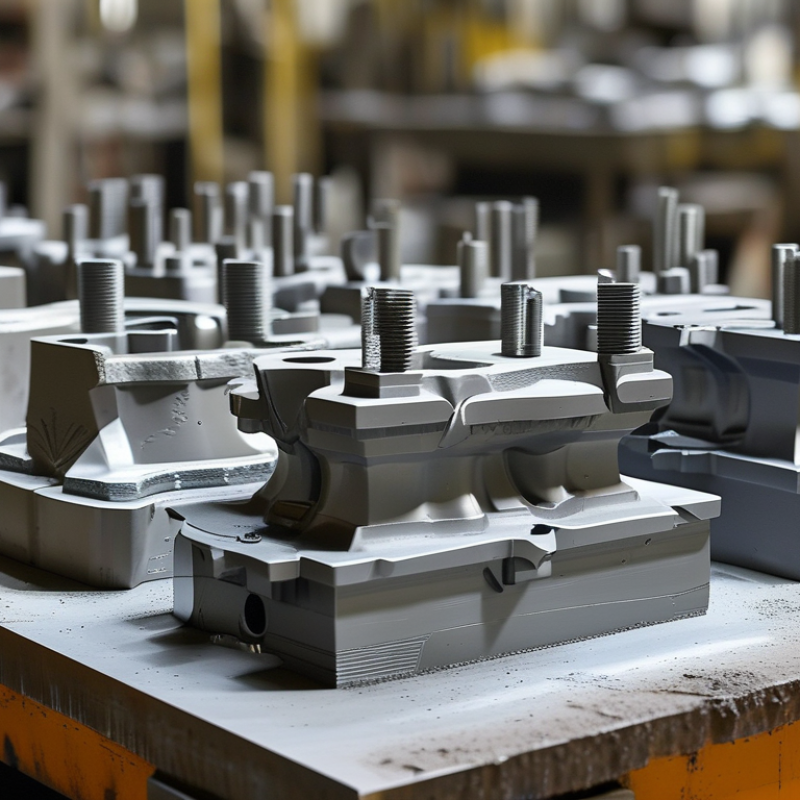
A sand casting mold is a shaped cavity that receives molten metal and defines the part’s basic geometry. The cavity comes from a pattern, while cores create internal holes, channels, or hollow sections. The mold may use green sand, dry sand, or chemically bonded sand. Each option changes strength, cost, surface texture, and production speed.
The cavity is decisive. A worn pattern can produce uneven edges, incorrect dimensions, or unwanted flash along the parting line. Poorly compacted sand may collapse during pouring. Excess moisture can create gas defects, leaving small holes inside the casting. Vent placement also matters because trapped air has nowhere to escape. These details often appear minor. They are not.
Choosing a mold requires matching the process to the part. Green sand suits many medium-sized components and repeated production. Chemically bonded sand can hold sharper details and larger molds, but it needs careful mixing and controlled curing. Draft angles help the pattern leave the mold without tearing the cavity. Radiused corners reduce stress and improve metal flow. Simulation software can predict shrinkage and hot spots, yet physical trials remain valuable. A model may look perfect on screen, while the first casting reveals an overlooked feeding problem. That uncomfortable result deserves investigation, not excuses. Check the mold hardness, moisture, venting, core alignment, and cooling pattern before changing the entire design.
How to Choose the Right Sand Casting Mold in 2026?
Key Mold Materials and Their Effects on Casting Quality
Sand remains the industry workhorse. American Foundry Society references estimate that sand casting produces roughly 80% of metal castings worldwide. Material choice still controls surface finish, gas defects, dimensional stability, and mold cost.
Green sand uses silica sand, clay, and water. It is economical and fast for high-volume iron and aluminum parts. However, excess moisture can create pinholes or rough surfaces. AFS guidance commonly places green sand moisture near 2% to 4%, depending on the system and alloy. Small changes matter. I have seen a slight moisture shift change venting results overnight.
Dry sand molds improve strength and reduce moisture-related defects. They suit larger castings and complex patterns, but require more energy and longer preparation. Chemically bonded sand offers better dimensional control. Its binder level, curing time, and reclamation quality need close monitoring. The European Foundry Association reports that sand reclamation can significantly reduce fresh sand demand, though actual savings depend on equipment and sand chemistry.
Ceramic molds tolerate high temperatures and deliver finer surfaces. They cost more and may not justify short production runs. No material wins every trial. Mold selection should compare alloy temperature, section thickness, production volume, and required tolerance. The first test may still fail. That failure often reveals more than a catalog specification.
Choosing the right sand casting mold in 2026 starts with the metal, not the catalog. Green sand suits iron and many nonferrous alloys at moderate temperatures. Its moisture supports quick pattern changes and economical short runs. For aluminum, dry sand can improve surface stability when thin walls or cleaner finishes matter. Steel demands stronger molds, careful venting, and heat-resistant additives. I have seen otherwise sound designs fail because the mold softened near a hot gate. That detail is easy to underestimate.
Match the mold to the shape. Simple housings often work well with green sand and a two-part pattern. Deep pockets, narrow passages, or undercuts may require cores, shell sand, or a more controlled process. Shell molds create finer surfaces and tighter dimensions, but their tooling cost needs enough volume to justify it. Large castings may favor chemically bonded sand, which holds complex cores more reliably. Still, more binder is not automatically better. Excess binder can increase gas defects and complicate reclamation.
Production volume changes the decision again. Job shops usually benefit from flexible patterns and low-cost green sand. Repeated batches can justify permanent tooling, automated molding, or resin-based systems with consistent compaction. Compare cycle time, scrap rate, labor, inspection results, and mold repair—not only purchase price. Ask for a trial pour. Record hardness, moisture, pouring temperature, and defect locations. Small data beats confident guesses. Not always. Pilot results should have the final say.
| Mold Type | Best-Matched Metals | Suitable Part Shapes | Typical Production Volume | Typical Dimensional Capability | Surface Finish | Relative Tooling & Pattern Cost | Best Use Case |
|---|---|---|---|---|---|---|---|
| Green Sand Mold | Gray iron Ductile iron Carbon steel Aluminum Copper alloys | Simple to moderately complex shapes; large housings, brackets, bases, manifolds, and parts with cores. | Prototype to high volume Approx. 10–100,000+ parts/year |
Generally about ±0.8–3.0 mm, depending on casting size, pattern quality, and process control. | Typically Ra 12.5–50 μm; machining is often required on functional surfaces. | Low tooling cost; highly economical for repeat production. | General-purpose production where low mold cost, flexibility, and broad alloy compatibility are priorities. |
| Dry Sand Mold | Steel Ductile iron Gray iron Aluminum | Large, heavy, or structurally demanding castings; thick sections and parts requiring stronger mold walls. | Low to medium volume Approx. 10–10,000 parts/year |
Generally about ±1.0–3.5 mm; dimensional stability is improved compared with untreated green sand. | Typically Ra 25–63 μm, depending on sand grain and coating. | Low to medium; additional drying time and energy increase process cost. | Large castings or applications where mold strength, erosion resistance, and storage stability are important. |
| Shell Mold | Carbon steel Alloy steel Stainless steel Iron Aluminum | Small to medium-sized parts with thin walls, fine ribs, sharper profiles, and repeatable details. | Medium to high volume Approx. 1,000–100,000+ parts/year |
Generally about ±0.25–1.5 mm, subject to part size and pattern accuracy. | Typically Ra 3.2–12.5 μm; usually smoother than green-sand castings. | Medium to high; heated metal patterns and resin-coated sand add cost. | Repeatable medium-sized components where improved finish, detail, and reduced machining are required. |
| No-Bake / Air-Set Mold | Carbon steel Stainless steel Ductile iron Aluminum Copper alloys | Very large or complex castings; deep cavities, irregular geometry, heavy sections, and one-off designs. | Prototype to medium volume Approx. 1–10,000 parts/year |
Generally about ±0.8–2.5 mm, depending on mold assembly and casting dimensions. | Typically Ra 12.5–50 μm; coatings can improve the mold-metal interface. | Medium; tooling is flexible, but sand, binder, labor, and reclamation costs can be significant. | Large, complex, or low-volume castings that are difficult to produce with automated green-sand equipment. |
| CO₂-Sodium Silicate Mold | Steel Iron Copper alloys | Large cores, complex internal passages, heavy castings, and molds requiring fast chemical hardening. | Prototype to medium volume Approx. 1–5,000 parts/year |
Generally about ±1.0–3.0 mm; results depend strongly on gas treatment and sand compactability. | Typically Ra 12.5–50 μm. | Medium; low pattern investment but higher binder handling and reclamation considerations. | Large steel or iron castings and core-making applications where rapid mold hardening is useful. |
| Lost-Foam Sand Mold | Aluminum Gray iron Ductile iron Steel | Complex near-net-shape parts, integrated bosses, curved passages, and geometries with difficult parting lines. | Low to high volume Approx. 100–100,000+ parts/year |
Generally about ±0.8–2.5 mm; foam pattern quality and coating control are critical. | Typically Ra 12.5–50 μm, influenced by foam bead size and refractory coating. | Medium; pattern production can be economical for complex shapes but requires controlled foam tooling. | Complex castings that benefit from fewer cores, reduced parting-line constraints, and near-net-shape production. |
| Vacuum-Assisted Green Sand | Aluminum Iron Steel Copper alloys | Thin-wall or detail-sensitive parts; complex surfaces where improved mold stability and gas control are needed. | Low to high volume Approx. 100–100,000+ parts/year |
Generally about ±0.5–2.0 mm, depending on equipment, pattern, and casting size. | Typically Ra 6.3–25 μm; often better than conventional green sand. | Medium to high; requires vacuum equipment and controlled flask systems. | Higher-quality castings where reduced gas defects, improved mold rigidity, and better surface definition justify added equipment. |
| Precision Sand Mold with Resin-Coated or Ceramic-Faced Surface | Aluminum Steel Stainless steel Nickel alloys | Small to medium complex parts requiring fine surface detail, thin sections, and limited machining allowance. | Prototype to medium volume Approx. 10–20,000 parts/year |
Generally about ±0.2–1.2 mm, depending on process design and thermal contraction. | Typically Ra 3.2–12.5 μm. | High per mold; justified when detail, reduced machining, or difficult alloys are involved. | High-value, detail-critical components where conventional sand cannot consistently achieve the required finish or accuracy. |
Note: The ranges shown are typical engineering guidelines rather than guarantees. Actual results vary with alloy chemistry, casting size, wall thickness, pattern material, sand system, molding equipment, core design, pouring temperature, and process control.
Mold selection should begin with the part drawing, not habit. In practical trials, I inspect thin walls, deep pockets, draft angles, and expected production volume. Accuracy matters most at mating surfaces. ISO 8062-3:2023 defines dimensional and geometrical tolerances for castings. Typical foundry data places chemically bonded and shell molds above green sand for finer detail. Still, the result depends on sand grain, binder control, pattern wear, and operator skill. Small variables create large rework costs.
Start with evidence.
Durability must include thermal shock, handling damage, and storage conditions. The 2024 Metalcasting Forecast & Trends report identifies energy, labor, and material costs as continuing pressures. A cheaper mold may become expensive after frequent repairs. The 2024 U.S. Geological Survey Mineral Commodity Summaries reports roughly 110 million metric tons of U.S. industrial sand and gravel production in 2023. Supply is strong, but quality consistency remains important. Test moisture, permeability, compactability, and surface strength before approval.
Reusability needs careful wording. Most sand molds are not reused as complete molds; reclaimed sand is reused after treatment. Record the reclamation rate, binder loss, defect rate, and cleaning time. Compare total cost per acceptable casting, not mold price alone. A simple trial can expose hidden waste: produce several batches, measure dimensional drift, and inspect edges under magnification. I have seen a highly accurate mold fail because its storage was poor. That judgment was partly mine. Recheck the assumptions before committing.
Choosing a sand casting mold in 2026 requires a measured, step-by-step method. Start with the part itself. Record alloy, weight, wall thickness, annual volume, dimensional tolerance, and surface finish. The World Foundry Organization’s 2023 census reported roughly 110 million tonnes of global casting production in 2022. That scale makes process efficiency important, even for smaller foundries.
Match the mold process to production reality. Green sand suits repeated production and lower tooling costs. No-bake sand offers larger molds and flexible pattern changes. Shell molding can improve detail and surface quality, but resin and heating costs need review. Compare mold strength, gas permeability, collapsibility, cycle time, and reclamation rate. Use ISO 8062 tolerance grades when discussing dimensional expectations. Do not trust a brochure alone.
Build a simple cost sheet. Include pattern wear, sand replacement, cores, labor, energy, finishing, and rejected castings. The U.S. Department of Energy’s metalcasting industry studies identify yield and energy use as major improvement areas. Measure both. A cheaper mold can produce more flash, inclusions, or machining allowance. That choice is often wrong.
Request a trial mold before approval. Inspect three to five castings, not just one. Check porosity, distortion, hardness, and cleaning time. Record results beside the predicted figures. Some assumptions will fail. Revise them openly. Experienced selection is not perfect; it becomes reliable through measured correction.
: It is a shaped cavity that receives molten metal and forms the part’s basic geometry. Cores create holes, channels, and hollow sections.
Green sand uses sand, clay, and water. Dry sand improves strength. Chemically bonded sand supports sharper details and larger molds.
Green sand suits repeated production of many medium-sized iron or aluminum parts. It is fast and relatively economical.
Excess moisture may create gas defects, pinholes, and rough surfaces. A small moisture change can alter venting results overnight.
Vents release trapped air during pouring. Draft angles help remove the pattern without tearing the cavity.
Inspect mating surfaces, thin walls, deep pockets, and edge details. Measure several batches for dimensional drift.Do not trust one casting.
Complete sand molds are usually not reused. Reclaimed sand may be treated and reused after testing its quality.
Compare total cost per acceptable casting. Include repairs, preparation, cleaning, rejected parts, energy, and reclamation time.
No. Simulation can predict shrinkage and hot spots, but physical trials may reveal feeding or alignment problems.The first result may disappoint.
Check hardness, moisture, permeability, venting, core alignment, pattern wear, and cooling patterns. Changing everything too early may hide the real cause.
Choosing the right Sand Casting Mold is essential for producing accurate, durable, and cost-effective metal parts in 2026. A mold defines the part’s external shape, surface finish, dimensional stability, and internal features, so its design and material directly influence casting quality. Common mold materials offer different levels of strength, permeability, thermal resistance, reusability, and finishing performance. The best choice depends on the metal being cast, the complexity and size of the component, required tolerances, and expected production volume.
A practical selection process should begin by identifying the alloy, part geometry, and production requirements. Next, compare mold types according to accuracy, durability, preparation time, maintenance needs, and total cost. For high-volume work, a more durable or reusable mold may improve consistency and reduce long-term expenses, while short production runs may benefit from simpler, economical options. Finally, evaluate trial results, including dimensional accuracy, surface quality, defect rates, and repair requirements, before confirming the final mold solution.

Haochu Machinery