Choosing the right Automotive Machined Parts supplier can determine whether a vehicle program remains stable or suffers costly interruptions. The decision involves more than comparing unit prices. It requires evidence of process control, material traceability, dimensional accuracy, and dependable communication.
Taiichi Ohno, a pioneer of the Toyota Production System, stated, “Without standards, you cannot say you have improved.” His principle remains practical today. A capable supplier should explain its machining standards clearly. Ask how it controls critical tolerances, measures runout, removes burrs, and verifies surface finishes. Request sample inspection reports, calibration records, and production photographs. A coordinate measuring machine report can reveal more than a polished sales presentation.
Look closely at the supplier’s daily work. Can it maintain the same bore diameter across thousands of pieces? Does it identify each steel batch? Are corrective actions documented after a rejected component? These details matter when parts enter steering, braking, powertrain, or electric-drive assemblies. Experience also teaches caution. No supplier is perfect. A factory may have excellent equipment but weak project communication. Another may offer attractive prices but lack backup capacity. That is an uncomfortable trade-off.
A reliable evaluation should include prototype quality, audit results, delivery performance, engineering support, and long-term capacity. Certifications can strengthen confidence, but they cannot replace direct verification. Speak with production engineers, not only sales representatives. Visit the facility when possible. Examine chips on the floor, measurement tools near the machines, and labels attached to finished parts. The right Automotive Machined Parts supplier proves reliability through repeatable evidence, not promises.
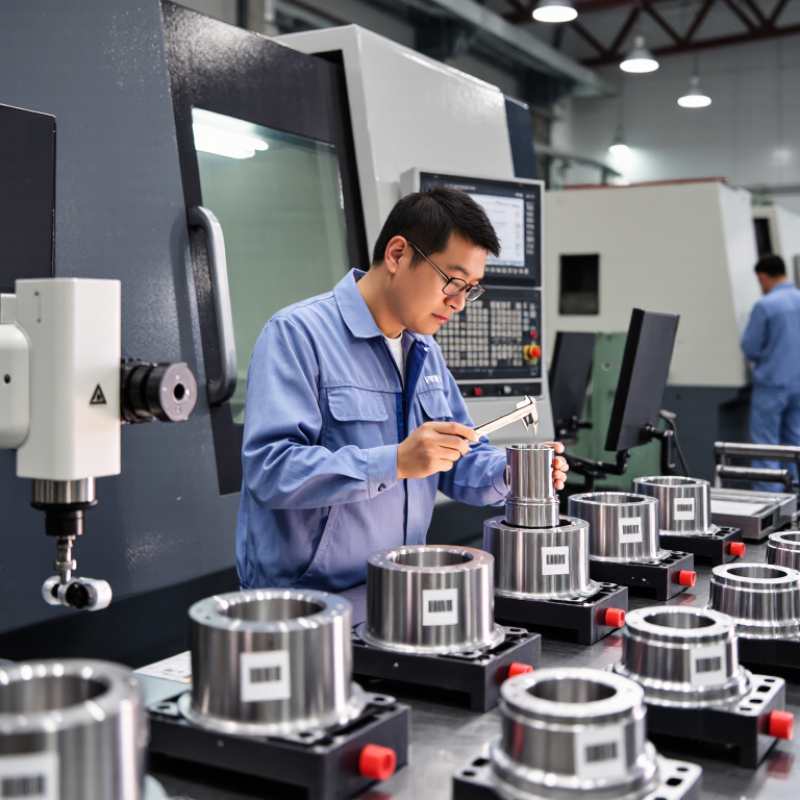
Define Part Requirements: Materials, Tolerances, Cpk ≥1.33, and PPAP Level 3
Choosing an automotive machined parts supplier starts with a measurable part definition. Specify the alloy, heat treatment, hardness, surface finish, datum scheme, and critical tolerances. A drawing saying “steel” is not enough. Material certificates should trace the heat number to the delivered batch. NIST’s Engineering Statistics Handbook identifies Cpk as a capability measure that considers process centering and variation. For safety-related features, request Cpk ≥1.33 under stable production conditions. One uncomfortable lesson: a capable trial run can hide weak control during volume production.
PPAP Level 3 should be a practical evidence package, not a signed cover sheet. The AIAG PPAP manual describes Level 3 as including design records, process flow, PFMEA, control plan, measurement results, material certifications, MSA studies, capability data, and sample parts. Ask the supplier to link every report to the same revision and cavity or machine. The ISO Survey reports more than one million ISO 9001 certificates worldwide, yet certification alone cannot prove dimensional capability. Review raw data, subgroup size, control charts, and measurement resolution. Perfect paperwork can still support a poorly defined process.
Tips: Give suppliers a marked-up drawing with critical characteristics. Require the Cpk calculation method in advance. Confirm whether the study uses short-term or ongoing production data. Visit the machining cell when possible. Listen to operators; they often notice tool wear before the report does. Allow controlled exceptions, but document every risk and approval.
How to Choose Automotive Machined Parts Suppliers
Define part requirements: materials, tolerances, Cpk ≥ 1.33, and PPAP Level 3
Cpk measures how consistently a process meets specification limits. A Cpk of 1.33 is a common automotive capability benchmark and corresponds to approximately four standard deviations from the nearest specification limit when the process is centered. Before supplier approval, confirm the material grade and certification, drawing tolerances, capability evidence for critical characteristics, and a complete PPAP Level 3 submission.
Audit Quality Data: SPC, MSA, First Article Inspection, and PPM Targets
Choosing an automotive machined parts supplier requires more than checking equipment lists. Audit the quality data behind every capability claim. Ask for SPC charts showing key dimensions, process trends, control limits, and documented reaction plans. A stable chart matters more than one excellent inspection result. Look for actual production records, not only prepared samples.
Measurement System Analysis should prove that gauges can detect meaningful variation. Review gauge R&R studies for critical diameters, flatness, and thread features. Confirm calibration status, operator conditions, and inspection resolution. First Article Inspection records should match the drawing, material certificate, revision level, and approved process. Traceability matters. A missing lot number can weaken an otherwise impressive report.
PPM targets must reflect production volume and part risk. A low PPM number from a small shipment may look better than it is. Request defect definitions, calculation methods, customer returns, and corrective-action history. Compare internal PPM with outgoing inspection findings. Also examine how the supplier handles repeated borderline results. Numbers can hide problems. I would not reject a supplier for one unusual spike, but I would expect a clear investigation and verified containment. Some audits focus too heavily on neat spreadsheets; raw data, timestamps, and shop-floor observations often reveal more.
Evaluate Total Cost, Lead Time, Capacity, Traceability, and Supply Continuity
Choosing an automotive machined parts supplier requires more than comparing piece prices. Calculate total cost, including tooling, freight, inspection, scrap, inventory, and engineering changes. A cheaper quote may create expensive delays. In supplier audits, I check three years of delivery records, not only promised lead time. Ask for median and worst-case performance. Capacity should be verified by machine type, available shifts, maintenance downtime, and current utilization. A supplier claiming “open capacity” may have no room for urgent work. The International Energy Agency’s Global EV Outlook 2024 reported nearly 14 million electric cars sold in 2023, showing how quickly automotive demand can shift. Your supplier must scale without damaging process control.
Traceability needs physical and digital evidence. Each batch should connect to material certificates, operator records, tool offsets, inspection results, and shipment labels. ISO’s 2023 Survey recorded more than 1.2 million ISO 9001 certificates worldwide, but certification alone does not prove strong traceability. Audit a real production lot. Follow one serial number backward. It should not disappear in a spreadsheet. Supply continuity also needs testing. Review backup machines, approved material sources, disaster recovery plans, and subcontracting controls. The supplier’s financial stability and workforce depth matter too. I would request a capacity model for normal and peak demand. It may still be imperfect. That weakness should be visible, measured, and corrected before production starts.
How to Choose Automotive Machined Parts Suppliers — Evaluate Total Cost, Lead Time, Capacity, Traceability, and Supply Continuity
| Supplier Profile |
Part Scope and Material |
Annual Volume Assumption |
Piece Price
(USD) |
Estimated Landed Cost
(USD/part) |
Production Lead Time
(Business Days) |
Monthly Capacity
(Parts) |
Traceability and Quality Evidence |
Supply Continuity Indicators |
Risk Level |
Weighted Evaluation Score
(100) |
| Supplier Profile A |
CNC-turned and milled aluminum housing; 6061-T6; anodized finish |
24,000 parts |
$18.40 |
$19.35 |
15–18 |
18,000 |
Material certificates, first-article inspection report, dimensional inspection records, lot-level labeling |
Two qualified machining cells; approved secondary finishing source; documented contingency plan |
Low |
88 |
| Supplier Profile B |
CNC-machined steel mounting bracket; 1018 steel; zinc-nickel plating |
36,000 parts |
$11.75 |
$12.60 |
20–25 |
30,000 |
Material heat number, plating certificate, in-process inspection plan, gauge calibration records |
High available capacity; single approved plating route; safety stock available for approximately two weeks |
Medium |
81 |
| Supplier Profile C |
Precision CNC valve body; 316L stainless steel; passivated finish |
12,000 parts |
$32.80 |
$34.05 |
10–14 |
9,000 |
Full material traceability, 100% critical-bore inspection, serialized inspection reports, retained samples |
Strong process control; limited spare capacity; documented preventive-maintenance program |
Medium |
86 |
| Supplier Profile D |
CNC-milled suspension component; 7075-T6 aluminum; hard anodized finish |
18,000 parts |
$27.90 |
$29.25 |
25–32 |
24,000 |
Material certificate, capability study for critical dimensions, final inspection report, batch identification |
Large installed machine base; alternate raw-material source; no confirmed backup finishing route |
Medium |
78 |
| Supplier Profile E |
CNC-turned brass connector; free-cutting brass; nickel plating |
60,000 parts |
$6.85 |
$7.42 |
18–22 |
75,000 |
Material certificates, plating thickness records, sampling inspection, barcode-based lot tracking |
Multiple production shifts; dual raw-material sources; formal business-continuity and disaster-recovery procedures |
Low |
91 |
| Supplier Profile F |
CNC-machined cast-iron carrier; ductile iron; phosphate coating |
15,000 parts |
$21.60 |
$23.10 |
30–38 |
16,000 |
Foundry heat records, dimensional inspection, coating certificate, nonconformance reporting process |
Longer replenishment cycle; one primary casting source; limited finished-goods buffer |
Medium |
72 |
|
Evaluation basis: Weighted score combines landed cost (25%), lead time (20%), capacity flexibility (15%), traceability and quality controls (20%), and supply continuity (20%). Landed cost includes the quoted piece price plus typical packaging, domestic freight, inspection, and finishing-related handling; tooling, taxes, duties, and engineering changes are excluded. Lead times are production estimates after drawing approval and material release. All supplier profiles are anonymized benchmark examples intended for procurement comparison and should be validated through quotations, audits, capability studies, and sample production.
|
Conclusion
Choosing the right Automotive Machined Parts supplier starts with clearly defining your technical and quality requirements. Specify materials, dimensional tolerances, surface finishes, and performance expectations, while requiring a process capability target of Cpk ≥1.33 and PPAP Level 3 documentation where applicable. Suppliers should demonstrate reliable management systems through current IATF 16949 and ISO 9001 certifications, along with suitable CNC machining capacity, tooling expertise, inspection equipment, and the ability to maintain accuracy of ±0.01 mm when required.
A thorough evaluation should also review SPC records, MSA studies, first article inspection results, and measurable PPM quality targets. Beyond unit price, compare total cost, lead time, production capacity, traceability, communication, and supply continuity. Auditing these factors helps confirm that a supplier can deliver consistent parts, respond to changing demand, control process risks, and support long-term automotive production without compromising quality or reliability.
 Haochu Machinery
