Choosing the Top 10 CNC Automotive Parts Suppliers Worldwide requires more than comparing glossy websites or hourly rates. Reliable automotive machining depends on repeatable tolerances, certified materials, documented inspections, and stable delivery performance. A supplier may produce a beautiful prototype yet struggle with ten thousand identical parts. That difference matters.
Taiichi Ohno, the architect of Toyota’s production system, said, “Without standards, there can be no improvement.” This principle remains highly relevant to Cnc Automotive Parts manufacturing. Standardized work instructions, calibrated measuring equipment, and traceable production records help convert machining skill into dependable results. They also reveal weaknesses that marketing pages often hide.
This guide examines suppliers through practical factors. These include CNC capacity, five-axis capability, aluminum and steel expertise, surface finishing, tooling support, quality certifications, and international logistics. It also considers engineering communication. A supplier that answers technical questions clearly can prevent costly design mistakes before cutting begins.
No ranking is perfect. Public information can be incomplete, and supplier performance may vary by factory, project size, or production season. Some companies excel at prototypes but lack high-volume discipline. Others offer excellent production control but communicate slowly across time zones. Buyers should verify current certifications, sample reports, inspection methods, and customer references before signing a contract.
The following companies represent strong options for automotive manufacturers, aftermarket brands, and engineering teams seeking dependable Cnc Automotive Parts. Their strengths differ. That difference deserves careful attention.
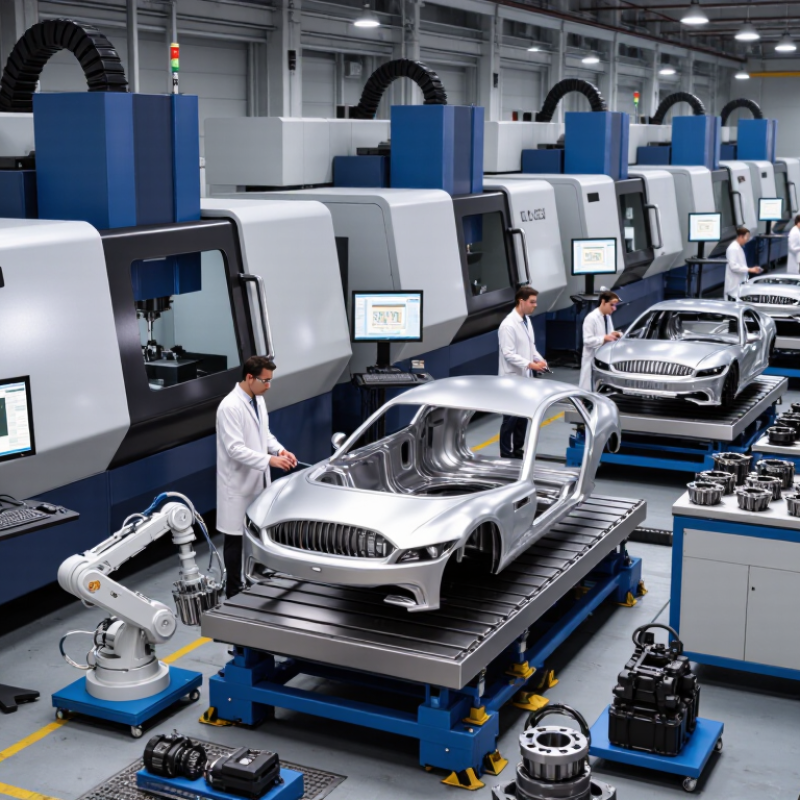
CNC automotive parts are components shaped by computer-controlled cutting, turning, milling, or drilling. They include brake caliper bodies, engine brackets, suspension joints, transmission housings, and sensor mounts. A digital design guides the machine, while skilled technicians select tools, materials, and inspection methods. This combination supports repeatable production for vehicles requiring tight dimensions and dependable performance.
These parts matter because small dimensional errors can affect safety, vibration, fuel efficiency, and assembly speed. For example, an inaccurately machined mounting surface may create uneven stress around a fastener. Experienced manufacturers check tolerances with coordinate measuring machines, gauges, and visual inspections. Material traceability also matters, especially when aluminum, stainless steel, or high-strength alloys face heat and vibration. However, precision does not remove every risk. Tool wear, programming mistakes, and poor finishing can still appear during production. Good suppliers investigate these weaknesses instead of hiding them.
Tips: Ask how parts are inspected, not only how quickly they are produced. Review material certificates, tolerance reports, surface finishes, and sample approval procedures. Confirm whether the supplier can maintain consistent quality across repeated batches. A practical trial order often reveals more than a polished presentation. Keep drawings updated, because unclear dimensions create avoidable disagreements. Evaluate communication, too. It is easy to overlook until a specification changes.
Selecting a global CNC automotive parts supplier requires more than comparing unit prices. The International Energy Agency reported nearly 14 million electric cars sold worldwide in 2023. That shift increases demand for precise housings, motor components, and lightweight aluminum parts. Ask suppliers for tolerance records, material certificates, and process capability data. A capable supplier should explain how it controls critical dimensions during production.
Quality systems deserve close attention. The ISO Survey 2023 recorded more than 1.26 million ISO 9001 certificates worldwide. Certification helps, but it does not guarantee excellent machining. Check whether the certificate covers the actual production site. Review inspection plans, calibration records, corrective actions, and traceability procedures. IATF 16949 experience is valuable for automotive programs, especially when parts require strict change control.
Capacity must be tested against real production conditions. Request evidence from similar batch sizes, cycle times, machine lists, and backup plans. Verify equipment through a remote or physical audit when possible. Ask how the supplier handles tool wear, late materials, and engineering changes. A polished presentation can still hide weak shop-floor discipline. No scorecard is perfect. Weight quality, delivery stability, technical communication, and total cost together. The lowest quote may create expensive delays through rework, freight, or repeated sampling. Small trial orders often reveal more than impressive claims.
The top ten CNC automotive parts suppliers worldwide are best judged by capability, not advertising. Strong suppliers produce engine brackets, suspension housings, steering components, sensor mounts, and transmission parts with stable accuracy. They use multi-axis machining, automated inspection, and documented process controls. Materials may include aluminum, stainless steel, alloy steel, and engineered plastics.
A reliable supplier should show recent inspection reports, equipment lists, and traceable material certificates. Ask about tolerance control, surface finishing, heat treatment, and production capacity. Skilled teams can hold tight dimensions across repeated batches, even when designs change. Secure data handling also matters for automotive drawings. Short lead times help, but rushed production can hide quality risks. Check samples first.
Supplier experience varies by region and application. Some factories excel at complex prototypes, while others manage high-volume production efficiently. A few offer excellent machining but weak packaging or communication. That weakness matters. Parts can arrive scratched, mislabeled, or exposed to moisture. I would compare corrective-action records, not only quoted prices. Factory audits, first-article inspections, and clear acceptance criteria provide stronger evidence than polished websites. Still, no ranking remains perfect. New equipment, staffing changes, or material shortages can quickly alter supplier performance. Recheck critical claims before signing a long-term agreement.
Top 10 CNC Automotive Parts Suppliers Worldwide: Key Services, Technologies, and Industries Served
The strongest CNC automotive suppliers offer more than accurate machining. They provide design support, prototype production, batch manufacturing, inspection, and dependable logistics. Common services include CNC milling, turning, Swiss machining, surface finishing, heat treatment, and assembly. Some suppliers also support reverse engineering and design-for-manufacturing reviews. These services help reduce production risks before expensive tooling begins.
Modern facilities often use five-axis machines, automated material handling, and digital production monitoring. Coordinate measuring machines verify critical dimensions, while optical scanners inspect complex surfaces. Materials may include aluminum, stainless steel, titanium, engineering plastics, and selected alloys. Suppliers commonly serve passenger vehicles, commercial trucks, electric vehicles, motorcycles, motorsport, and industrial mobility systems. However, advanced equipment alone does not guarantee consistent results. Process records, operator training, and corrective-action systems matter just as much.
Tips: Ask for sample inspection reports, material certificates, and realistic tolerance data. Confirm whether finishing and secondary operations are handled internally. A supplier may promise tight tolerances, but every design has practical limits. I have found that clear drawings prevent more problems than impressive machinery. Discuss forecast changes, minimum quantities, packaging, and delivery buffers early. A small pilot batch can reveal clamping issues, tool wear, or surface defects before full production. Do not judge suppliers only by price. The cheapest quote may hide inspection gaps or unstable lead times.
| Rank | Supplier Profile | Primary Region | Core CNC Services | Key Technologies | Common Materials | Typical Capability | Industries Served | Quality and Compliance Focus |
|---|---|---|---|---|---|---|---|---|
| 01 | Profile A — High-volume precision machining | East Asia | CNC turning, milling, drilling, tapping, deburring, and assembly | Multi-axis machining, automated bar feeding, robotic loading, in-process probing | Aluminum, carbon steel, stainless steel, brass, engineering plastics | Prototype to mass production; dimensional control commonly within ±0.01–0.05 mm | Passenger vehicles, commercial vehicles, electric mobility, industrial equipment | Process inspection, material traceability, control plans, PPAP-style documentation |
| 02 | Profile B — Automotive powertrain specialist | Central Europe | Precision turning, hard turning, gear-related components, grinding, and finishing | CNC Swiss turning, cylindrical grinding, optical inspection, automated gauging | Hardened alloy steel, stainless steel, tool steel, sintered metals | Repeat production; tight fits, surface finishes commonly down to Ra 0.4–1.6 μm | Engines, transmissions, drivetrains, braking systems, fluid-control systems | IATF-oriented quality systems, capability studies, SPC, full inspection records |
| 03 | Profile C — Lightweight component manufacturer | North America | CNC milling, turning, fixture machining, finishing, and low-volume assembly | Five-axis machining, high-speed aluminum cutting, CAD/CAM simulation, CMM inspection | Aluminum alloys, magnesium alloys, titanium, stainless steel, composites | Prototype and short-run production; complex geometries with repeatable datum control | Electric vehicles, vehicle structures, thermal management, motorsport, aerospace support | First-article inspection, CMM reports, lot traceability, engineering change control |
| 04 | Profile D — High-mix contract manufacturer | Southeast Asia | CNC milling, turning, sheet-metal integration, surface treatment coordination, assembly | Three- and four-axis machining, production scheduling software, barcode traceability | Aluminum, mild steel, stainless steel, brass, nylon, POM | Prototype, pilot, and medium-volume batches; tolerance planning based on drawing requirements | Automotive interiors, chassis accessories, electrical housings, aftermarket components | Incoming inspection, in-process checks, final sampling, supplier material certificates |
| 05 | Profile E — Electric mobility component supplier | Western Europe | CNC housing production, thermal parts, busbar support parts, milling, and turning | Five-axis machining, thin-wall milling, leak testing, automated dimensional inspection | Aluminum, copper, stainless steel, nickel-plated materials, technical plastics | Prototype through series production; emphasis on flatness, sealing surfaces, and burr control | Battery systems, electric motors, inverters, charging equipment, thermal systems | Electrical isolation controls, leak testing, traceability, environmental and process monitoring |
| 06 | Profile F — Precision turned-parts supplier | Japan and East Asia | Swiss turning, CNC turning, micro-drilling, threading, and secondary operations | Sliding-head lathes, bar feeders, automatic optical sorting, tool-life monitoring | Stainless steel, alloy steel, brass, copper, aluminum, small-diameter polymers | Small and miniature parts; production diameters commonly below 32 mm | Fuel systems, sensors, actuators, valves, connectors, safety mechanisms | Automated 100% inspection for selected features, gauge calibration, batch control |
| 07 | Profile G — Heavy-duty vehicle parts supplier | Northern Europe | Large-part milling, turning, boring, drilling, and repair-part production | Large-format CNC equipment, probing, CAD/CAM nesting, coordinate measurement | Ductile iron, alloy steel, stainless steel, aluminum, wear-resistant plate | Low- and medium-volume production; large work envelopes and robust fixturing | Trucks, buses, off-highway vehicles, hydraulics, construction equipment | Weldment verification, dimensional inspection, material certificates, repair traceability |
| 08 | Profile H — Integrated machining and finishing supplier | South Asia | CNC machining, heat-treatment coordination, anodizing, plating, and assembly | Multi-operation cells, digital work instructions, automated tool compensation | Aluminum, carbon steel, stainless steel, brass, copper, engineering plastics | Prototype to medium-volume production; integrated sourcing reduces supplier handoffs | Steering systems, suspension parts, brackets, pumps, industrial vehicle systems | Coating thickness checks, hardness testing, inspection plans, nonconformance control |
| 09 | Profile I — Prototype and tooling specialist | North America and Mexico | Rapid CNC prototyping, soft tooling, fixtures, jigs, and pilot-run components | Five-axis machining, rapid programming, additive-manufactured fixtures, reverse engineering | Aluminum, tool steel, stainless steel, PEEK, nylon, acetal | One-off to low-volume batches; fast design iteration and engineering feedback | Vehicle development, motorsport, testing equipment, robotics, specialty vehicles | Design-for-manufacturing review, inspection reports, revision control, prototype validation |
| 10 | Profile J — Cost-efficient production supplier | Eastern Europe | CNC turning, milling, drilling, tapping, deburring, and kitting | Vertical machining centers, CNC lathes, palletization, digital production monitoring | Steel, stainless steel, aluminum, brass, cast iron, engineering plastics | Medium- to high-volume production; standardized parts and repeat orders | Automotive hardware, seating systems, exhaust components, agricultural vehicles | Statistical sampling, gauge management, supplier audits, packaging and lot identification |
Note: The supplier profiles are anonymized capability categories. Actual tolerances, materials, certifications, production volumes, and inspection requirements should be confirmed against each supplier’s current technical documentation and quotation.
A top-ten supplier list is only a starting point. The right CNC partner must match your part, volume, material, and quality risk. Ask whether the supplier has produced similar automotive components, such as transmission housings, brackets, or sensor mounts. Request sample drawings and inspection reports. Real evidence matters more than attractive photographs.
Check machine capability carefully. A supplier may offer three-axis machining but lack the five-axis capacity your geometry requires. Review tolerance control, surface finish, tool management, and production capacity.
Confirm whether the facility uses calibrated CMM equipment and maintains complete material traceability. Standards such as ISO 9001 or IATF 16949 can support confidence, but certificates alone prove little. Audit the actual process.
Communication is equally important. Ask how engineering changes, nonconforming parts, and delivery delays are handled. A reliable supplier should explain corrective actions with dates, measurements, and responsible personnel.
Request a small pilot batch before approving full production. It reveals fixture problems, burrs, inconsistent finishes, and packaging weaknesses.
No checklist is perfect. I still recheck critical dimensions after approval. Cost can also mislead. A low quotation may exclude inspection, tooling, secondary operations, or realistic scrap rates. Choose the supplier that explains these risks clearly, even when the answer is inconvenient.
They are vehicle components made by computer-controlled cutting, turning, milling, or drilling. Examples include engine brackets, brake caliper bodies, suspension joints, and sensor mounts.
A tiny dimensional error can cause vibration, uneven fastener stress, or slower assembly. It may also affect safety and fuel efficiency. Small details matter.
Common choices include aluminum, stainless steel, alloy steel, and engineered plastics. Material selection depends on heat, vibration, strength, and weight requirements.
Request tolerance reports, material certificates, surface-finish records, and sample approvals. Coordinate measuring machines, gauges, and visual checks provide useful evidence.
Ask about similar automotive projects, machine capability, inspection methods, tool management, and production capacity. Also ask how engineering changes and defective parts are handled.
No. Three-axis equipment may struggle with complex angles and enclosed features. Some geometries require multi-axis machining, special fixtures, or additional operations.
A small trial can reveal burrs, fixture problems, inconsistent finishes, labeling errors, and weak packaging. Samples matter. Full production can hide problems until later.
Not always. A low price may exclude tooling, inspection, finishing, packaging, or realistic scrap rates. I would compare total risk, not only the quoted number.
It becomes critical when drawings change or delivery delays occur. Strong communication includes dates, measurements, assigned personnel, and documented corrective actions. People sometimes overlook this.
An audit can verify equipment, inspection routines, material traceability, and process controls. However, no checklist is perfect. Recheck critical dimensions after approval.
Cnc Automotive Parts are precision components manufactured through computer-controlled machining processes, offering the accuracy, consistency, and durability required in modern vehicles. This overview explains why these parts matter across automotive applications, from prototypes and replacement components to high-volume production systems. It also outlines how to evaluate global suppliers by considering machining capabilities, material expertise, quality control, certifications, production capacity, lead times, communication, and cost transparency.
The discussion presents a practical framework for comparing the top 10 Cnc Automotive Parts suppliers worldwide without focusing on specific brand names. It highlights key services and technologies, including multi-axis machining, turning, milling, surface finishing, inspection, and rapid prototyping, while addressing industries such as passenger vehicles, commercial transportation, electric mobility, and motorsport. Finally, the guide helps automotive companies choose a suitable supplier by matching technical requirements, delivery expectations, quality standards, customization needs, and long-term cooperation goals.

Haochu Machinery