Explore our premium range of precision engineered components optimized for durability, high tolerances, and rigorous automotive and industrial assembly demands.
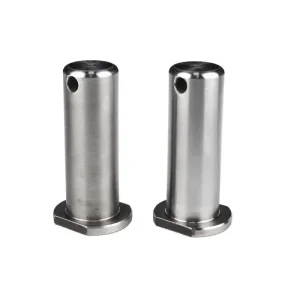
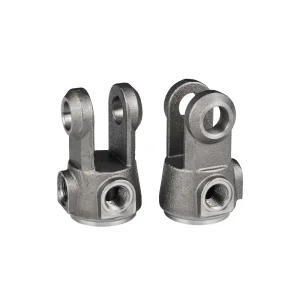
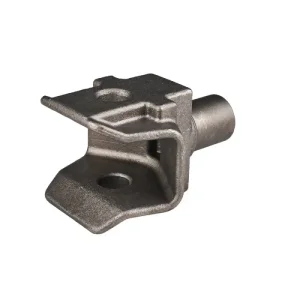
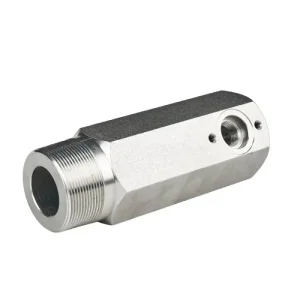
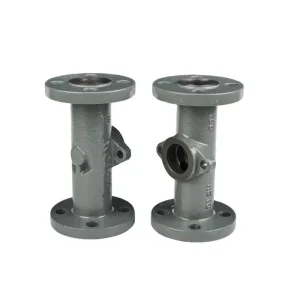
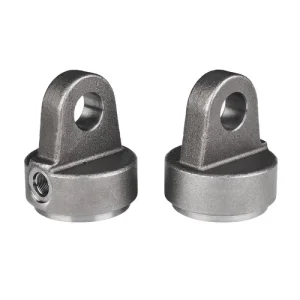
Ningbo Yinzhou Haochu Machinery Manufacturing Co., Ltd. (established in 2013) is a modern manufacturing enterprise specializing in the research, production, and service of casting and forging technologies. Driven by innovation, the company is committed to delivering high-precision machining solutions for industries such as automotive parts, agricultural machinery, valves, and industrial automation.
Through our dedicated integration of engineering design, tooling customization, silica sol investment casting, forging, and secondary CNC precision finish-machining, we produce high-performance industrial components that meet and exceed rigorous international quality criteria. Operating within a robust digital manufacturing ecosystem, our facilities ensure consistent quality control, fast turnaround cycles, and competitive pricing frameworks for our global clients.

Navigating the transition toward lightweighting, structural integration, and carbon neutrality in global transport supply chains.
The global automotive industry is undergoing a structural paradigm shift. Driven by aggressive carbon-emission regulations, the adoption of New Energy Vehicles (NEVs), and the demand for enhanced range efficiency, manufacturers are pressured to redesign components with higher strength-to-weight ratios. The technical roadmap for automotive casting is transitioning from traditional, heavy sand-cast iron parts to lightweight alloy steel, aluminum-magnesium alloys, and ultra-high-precision thin-wall casting structures.
For powertrain applications, optimization focuses on integrating structures. Instead of welding multiple stampings together, tier-1 suppliers utilize large-scale structural castings and highly complex silica sol investment processes to cast components in a single, robust cycle. This reduction in the parts-count directly lowers assembly defects, enhances fatigue performance, and reduces vehicle chassis weights. Advanced heat treatments and specific micro-alloying techniques (e.g., adding trace amounts of niobium or vanadium to LCC alloy steels) ensure that structural parts maintain extreme impact toughness even at sub-zero temperatures.
Furthermore, digital twin casting simulations are key to modern foundry workflows. By simulating mold filling, solidification behaviors, and thermal stresses using software such as Magmasoft or ProCAST, engineers at HAO CHU optimize sprue gates and risers prior to cutting molds. This proactive approach eliminates structural shrinkage porosity, air entrapments, and thermal cracking, achieving an incredibly reliable first-time yield rate. In the coming decade, additive manufacturing (3D printed sand molds and wax patterns) will merge with traditional processes to expedite rapid prototyping, driving the industry toward shorter iteration cycles and highly agile batch production.
Replacing traditional heavy assemblies with unified cast designs to reduce structural chassis weight, lowering emissions and maximizing EV driving range.
Using LCC (low carbon cast) and chromium-molybdenum steel alloys to withstand high pressure, friction, and extreme environmental dynamics.
Deploying digital twin flow analysis and sensor-controlled cooling systems to achieve absolute consistency in mechanical properties across batches.
High-integrity, cross-sector solutions configured to support demanding automotive, agricultural, oil, and pipeline infrastructures.
Precision casting is not a standalone process; it is the foundation of high-performance modern machinery. As a veteran China automotive casting manufacturer, HAO CHU bridges the gap between raw foundry outputs and ready-to-assemble components. Our solutions focus on three major industrial pillars:
From oil pump brackets, engine block fittings, and transmission cases to structural components in multi-link suspension arms, we deliver high-integrity castings. Using high-precision CNC finish-machining, we guarantee mounting tolerances within 0.02mm, securing perfect alignment, reducing operational vibrations, and extending the lifespan of vehicle drivetrains.
Fluid lines demand zero-leakage configurations. Our high-performance LCC alloy steel oil valves and pipeline fittings are cast using premium silica sol methodologies to prevent micro-porosity and internal blowholes. After CNC finishing, parts undergo strict hydrostatic testing to ensure reliable sealing in extreme oilfields, gas pipelines, and chemical refineries.
Off-highway agricultural equipment must endure harsh, muddy, and high-impact environments. Our high-performance alloy steel tractor accessories are engineered for high fatigue strength and impact toughness. Surface treatments like zinc plating, phosphating, and advanced electrophoretic coating (E-coating) prevent rust and corrosion in extreme field conditions.
| Application Sector | Material Classifications | Tolerance & Finishing Standards | Key Testing Regimes |
|---|---|---|---|
| Automotive OEM Powertrains | Stainless steel, carbon steel, custom alloy steel | ISO 8062 CT4-CT6 (Cast), ±0.015mm (CNC machined) | CMM dimensional check, 3D scanning, UT (Ultrasonic Testing) |
| Oil & Gas Pipelines | LCC, WCB, LCB, Stainless steel 316L | ANSI / ASME Class 150-1500 compliant tolerances | Hydrostatic pressure testing, DPI (Dye Penetrant Inspection) |
| Agricultural Gearboxes | Alloy Steel (ASTM 4130 / 8620), Ductile Iron | Custom structural profiles, high wear-resistant surfaces | Charpy V-Notch impact testing, Brinell hardness testing |
How HAO CHU leverages advanced automation, local industrial clusters, and end-to-end integration to secure your supply chain.
In the modern manufacturing landscape, supply chain resilience is as critical as technical prowess. Operating from Ningbo, one of China's most advanced deep-water port cities and a global hub for metallurgical innovation, HAO CHU provides unparalleled logistical and production benefits to international markets. Our Factory 4.0 initiatives combine raw material integration, smart forging/casting, precision machining, and automated quality checks under one system, minimizing process handoffs and lead-time bottlenecks.
This localized network gives us direct access to high-purity alloy steels and high-quality silica sol materials, cushioning our clients from global material price volatility. By integrating all production stages within our plant, we maintain tight control over process parameters. In investment casting, even minor changes in humidity or wax temp can impact the final component. Our automated drying lines and environmental controls ensure high dimensional stability, allowing us to maintain a 99.5%+ product qualification rate.
Furthermore, our CNC finish-machining workshop is equipped with multi-axis machining centers and digital coordinate measuring machines (CMM). This internal capability eliminates the extra costs, logistics, and quality disputes common when outsourcing machining. This streamlined workflow reduces standard lead times to 7–12 days for custom prototyping, helping automotive brands accelerate their time-to-market.
Our automated silica sol ceramic slurry coating system maintains consistent shell thickness and drying rates. This prevents mold cracking and surface roughness, ensuring smooth cast surfaces (Ra 3.2 or better) and reducing the need for intensive post-process grinding.
Equipped with high-precision machining centers, our team performs milling, drilling, thread-tapping, and high-tolerance internal grinding. With an output accuracy of 0.02mm, we deliver components ready for direct integration on automated automotive assembly lines.
Supporting international supply chain managers with complete material traceability, ASTM/DIN/JIS standards compliance, and flexible MOQs.
Global procurement heads must balance multiple constraints when sourcing custom components: consistent quality, cost efficiency, risk management, and regulatory compliance. At HAO CHU, we address these challenges through transparent, ISO 9001-certified management systems. We ensure complete traceability, starting with raw material melt batches and continuing through to final surface finishing.
Our quality control department employs a three-tier inspection system: raw material analysis, in-process dimensional control, and final out-going quality control (OQC). Every shipment is accompanied by Mill Test Certificates (MTC to EN 10204 3.1) showing chemical composition, tensile strength, yield strength, elongation, and impact test values. For critical oil valve and automotive suspension parts, we perform non-destructive testing (NDT), including dye penetrant, magnetic particle, and ultrasonic inspection, to guarantee zero subsurface defects.
Our complete manufacturing flow, from quoting to post-delivery feedback, complies with the ISO 9001 international standard.
Spectrographic analysis ensures chemical compositions match international standards (ASTM, EN, DIN, JIS) before pouring.
Supporting both low-volume custom runs and high-volume automotive releases, optimizing inventory costs for clients.
Direct answers from our engineering team regarding design constraints, material selections, and manufacturing tolerances.
For raw investment castings using the silica sol process, we consistently meet ISO 8062-3 linear tolerance grades CT4 to CT6. For features that require tighter tolerances (such as mating surfaces, seal pockets, and threaded ports), we use post-cast CNC machining. This allows us to achieve tolerances within ±0.02mm (and down to ±0.01mm for specific grinding geometries), ensuring parts are ready for automated production lines.
Silica sol investment casting offers superior surface finish (typically Ra 3.2–6.3 μm) and tighter dimensional control compared to water glass casting. Silica sol binders create highly stable ceramic molds that resist thermal shock and erosion during pouring, which minimizes surface defects and decarburization. This reduced rough surface variation lowers overall machining costs and is ideal for complex, safety-critical automotive parts.
We use a multi-step quality control system to prevent pressure leaks. First, we perform casting flow simulations to optimize gating designs and eliminate air voids. Second, all cast LCC alloy steel valves undergo non-destructive testing (NDT), such as dye penetrant and ultrasonic inspection, to check for micro-porosity. Finally, we perform hydrostatic pressure testing at 1.5 times the rated working pressure on all finished valves to guarantee leak-free performance before shipment.
We provide a variety of surface treatments to meet different environmental demands. These include zinc plating (blue-white, yellow, and black passivation), phosphating, powder coating, and advanced electrophoretic coating (E-coating). E-coating is particularly popular for under-chassis automotive parts because it provides uniform coverage and excellent resistance to salt spray tests (often exceeding 500 hours).
Our complete catalog ranges from pressure-tested oil pipeline valves to custom agricultural and general engineering components.
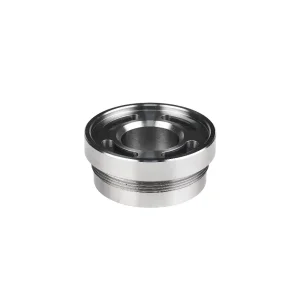
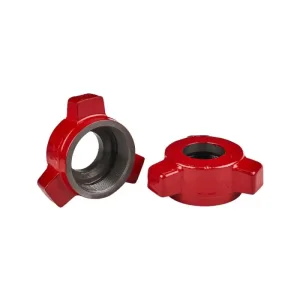
Partner with HAO CHU for high-precision casting and CNC machining. Submit your 2D/3D CAD drawings for a detailed cost and design-for-manufacturability (DFM) analysis.
 Haochu Machinery