Discover our signature line of custom investment cast and precision machined components, engineered to meet strict international tolerances.
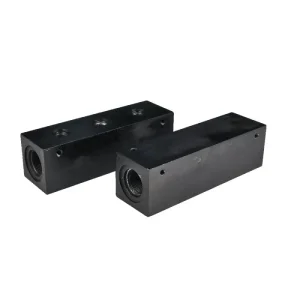
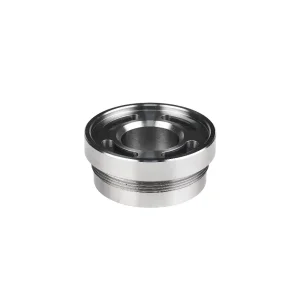
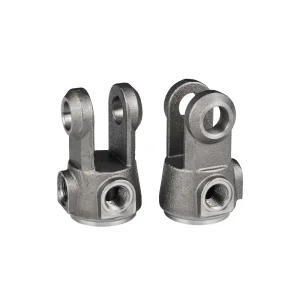
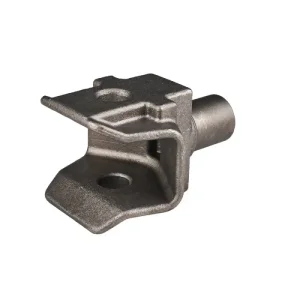
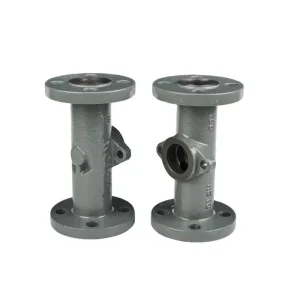
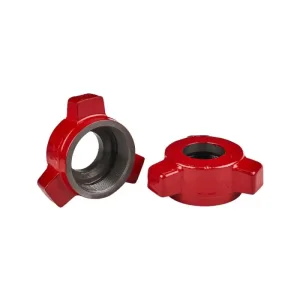
Ningbo Yinzhou Haochu Machinery Manufacturing Co., Ltd. (known globally as HC MACHINE) is a modern manufacturing enterprise specializing in the research, production, and service of casting and forging technologies. Driven by innovation, the company is committed to delivering high-precision machining solutions for industries such as automotive parts, agricultural machinery, valves, and industrial automation.
Combining industry-leading engineering talent, high-precision manufacturing processes, and state-of-the-art inspection machinery, we ensure our global partners receive dimensionally stable, highly durable casting components optimized for high-stress operational environments.

An authoritative, step-by-step engineering overview of the silica sol investment casting process as practiced in our Chinese manufacturing facilities.
Investment casting, historically known as the lost-wax process, is a manufacturing method that produces high-tolerance, geometrically complex components with exceptionally smooth surface finishes. Compared to sand casting, investment casting utilizing colloidal silica sol binders is the preferred process for manufacturing structural parts that must withstand extreme chemical, mechanical, and pressure stresses. At HC MACHINE, we specialize in high-end silica sol investment casting paired with secondary CNC machining to deliver parts that meet tight tolerance requirements, saving our clients time and cost.
The procedure begins with the creation of the metal die (often CNC milled from aerospace-grade aluminum or steel). This mold contains the precise negative shape of the desired component, accounting for shrinkage margins of both the wax and the metal alloy. Our CAD/CAM engineers perform detailed flow and shrinkage simulation models before machining the die to prevent downstream defects.
High-grade virgin wax is heated and injected under constant pressure into the aluminum mold to produce the wax patterns. The cooling parameters are monitored digitally. Once cooled, the wax patterns are extracted, inspected for dimension accuracy, and prepared for assembly.
Individual wax patterns are strategically welded onto a central wax sprue, runner, and gating system to form a "wax tree". This structural setup determines the flow path of the molten alloy, ensuring uniform pressure distribution and minimizing turbulent flows during the pouring stage.
The assembled wax tree is dipped into a liquid ceramic slurry containing premium colloidal silica sol binder and fine zirconium flour. Once coated, it is dusted with granular stucco sand. The tree is dried in a climate-controlled curing room where temperature and humidity are continuously logged. This process is repeated 5 to 7 times, using progressively coarser silica sand to build a high-strength ceramic shell.
Once dry, the shell is placed in an autoclave. Steam pressure melts the wax out of the ceramic shell, leaving a hollow ceramic mold. The wax is collected, filtered, and reused in non-critical components to reduce resource waste.
The ceramic mold is fired in a sintering furnace at temperatures between 950°C and 1050°C. Sintering achieves two objectives: it removes trace organic compounds, and it strengthens the ceramic structure, rendering it chemically inert and capable of withstanding the thermal shock of molten metal.
The chosen alloy (carbon steel 45#, LCC alloy steel, aluminum 6061, or stainless steel) is liquefied in an induction furnace. Spectroscopy verifies the exact chemical composition before pouring. The molten metal is poured into the preheated ceramic mold, allowing gravity or vacuum assist to pull the liquid metal into every intricate feature.
After cooling, the ceramic shell is broken away through vibration and media blasting (pneumatic knockout). The castings are then cut from the central runner tree. Residual gate stubs are ground flush to the surrounding component geometry.
While investment casting provides excellent near-net shapes, high-precision applications demand secondary machining. Our facility is equipped with 40 advanced CNC lathes and milling centers that achieve tolerances up to 0.02mm. Operations include precision drilling, thread tapping, face milling, and high-tolerance grinding.
Our QC team includes 10 senior inspectors utilizing Coordinate Measuring Machines (CMM), spectroscopic metal analysis, and ultrasonic crack detection to maintain a 99.5%+ pass rate.
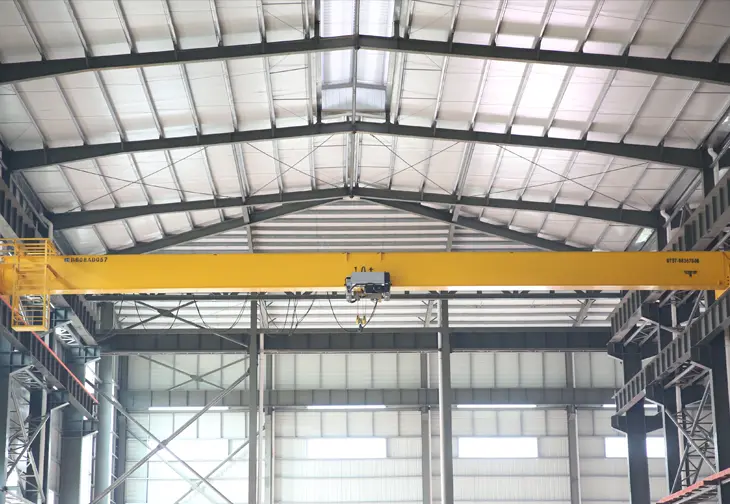
Our factory floor holds 40 modern machining centers, precision grinding heads, and electro-coating lines, allowing us to perform all finishing operations in-house.
A structured three-tier inspection system checks raw materials, in-process configurations, and final shipments, ensuring robust traceable compliance.
Why international engineering companies source their precision castings from Ningbo, China.
Ningbo is recognized globally as one of the world's most advanced metal casting and industrial machining hubs. Our facility, Ningbo Yinzhou Haochu Machinery Manufacturing Co., Ltd., benefits directly from this regional integration.
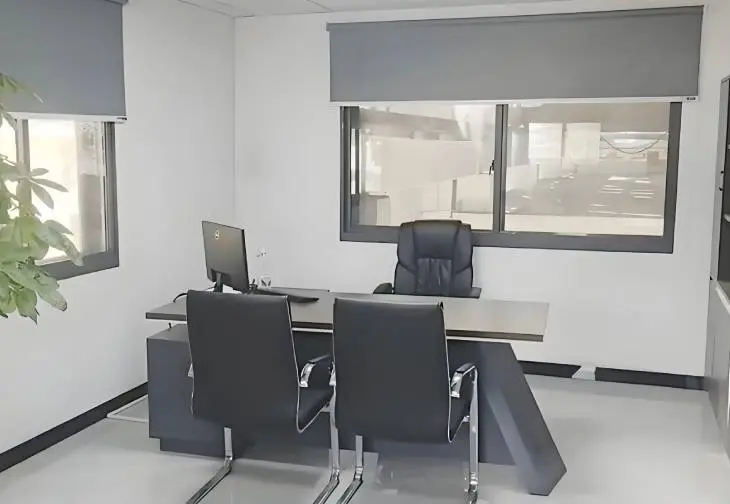
Global procurement teams face the challenge of balancing costs, high-tolerance requirements, and lead times. To support these demands, HC MACHINE has optimized its business processes to provide an agile, low-risk path from CAD data to delivery:
We deliver smarter and more reliable solutions for global industries, backed by verified compliance frameworks.
When sourcing custom machinery parts, traceability is non-negotiable. HC MACHINE adheres strictly to international materials standards including ASTM, DIN, EN, and JIS.
Every product batch is accompanied by comprehensive material test reports (MTRs) detailing chemical composition and physical properties (tensile strength, yield strength, elongation). We operate in compliance with RoHS and REACH environmental regulations, ensuring our agricultural, hydraulic, and automotive parts can be integrated directly into target markets without regulatory friction.
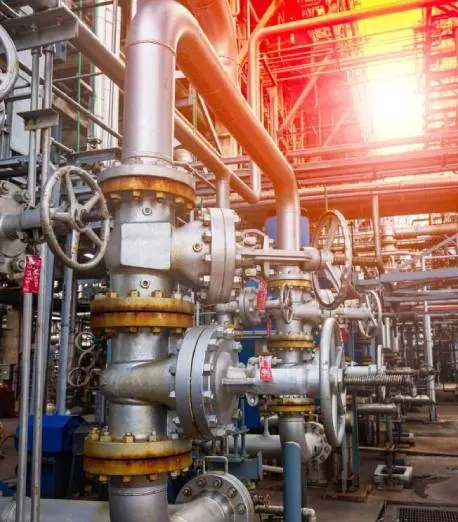
Our components are widely deployed in harsh industrial environments including:


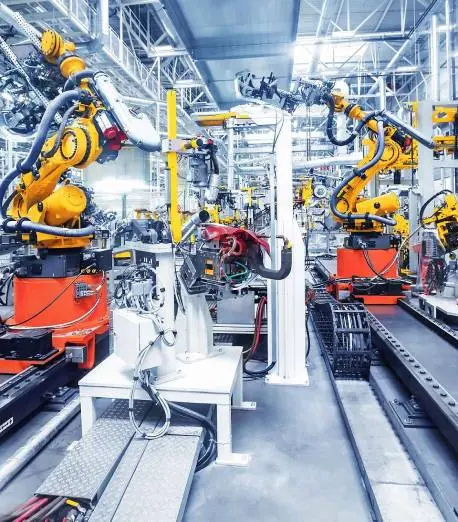
How digital integration and automation are shaping the next generation of casting production lines.
Robotic pouring systems reduce thermal fluctuations during metal filling, producing a more homogeneous alloy grain structure and reducing internal shrink defects.
By eliminating the tooling phase for prototypes, we can use 3D printed PMMA or wax models to cut validation schedules down to 48 hours for rapid R&D cycles.
By using advanced shell binder formulations and reclaiming almost all used casting wax, modern facilities achieve lower energy consumption and reduced carbon footprints.
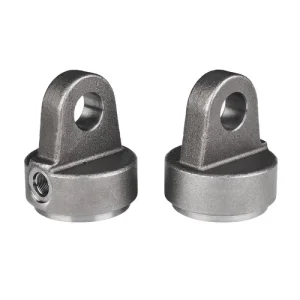
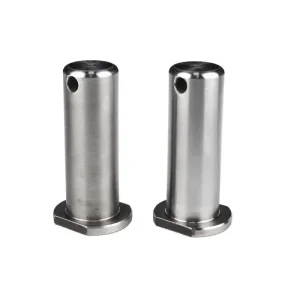
Engineered components designed for high-stress applications across agricultural, hydraulic, automotive, and pipeline sectors.
"Precision Crafts Quality, Innovation Defines the Future"

We are committed to becoming a global innovation leader in high-end equipment manufacturing, driving precision engineering with smart technologies and empowering the future of industry through sustainable development. By advancing intelligent, digital, and green technologies, we aim to establish a world-class benchmark in machinery manufacturing that integrates R&D, production, and service.
Guided by our core philosophy of "Precision Crafts Quality, Innovation Defines the Future," we foster efficient industry collaboration and elevate customer value by delivering smarter, more reliable solutions for global industries. Upholding green manufacturing principles, we build a low-carbon, resource-efficient ecosystem, fulfill social responsibilities, support employee growth, and drive community prosperity to achieve our ultimate mission: "Intelligently Crafting a Better World."
With technology as our backbone and responsibility as our soul, we strive to illuminate the global stage with China’s intelligent manufacturing excellence.
Technical and logistics questions regarding investment casting procurement in China.
Silica Sol casting provides far superior surface finish (typically Ra 3.2 to 6.3 microns) and much higher dimensional accuracy compared to the Water Glass process. It prevents shell cracking and surface decarburization, making it the preferred method for high-performance automotive parts, oil valves, and structural mechanical elements.
For raw castings, we meet linear dimensional tolerances within ISO 8062 Grade CT4-CT6. For finished machined items, our modern CNC lathes, machining centers, and grinding equipment routinely achieve post-machining tolerances as tight as 0.02mm.
We use an optical emission spectrometer to test the chemical formulation of every molten batch before pouring. We provide complete material test reports (MTR) according to EN 10204 3.1 standards, ensuring full traceability and compliance with ASTM, DIN, and ISO standards.
Our standard tooling development and rapid proofing process takes 7 to 12 days. This includes CAD verification, metal die fabrication, wax sample casting, dimensional inspection, and post-machining checkouts.
Our quality control department is ISO 9001 certified. We execute a three-tier inspection system: Incoming raw material analysis, in-process checking (wax model control, shell thickness monitoring, casting temperature checks), and 100% final inspections (visual, dimensional CMM checking, non-destructive testing if requested).
 Haochu Machinery