Explore our foundational range of heavy-duty casting components and custom mold tooling, built to withstand extreme mechanical loads and strict environmental tolerances.
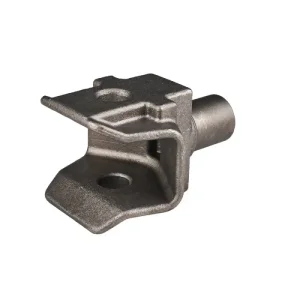
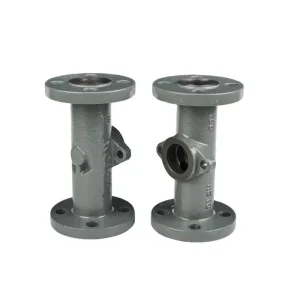
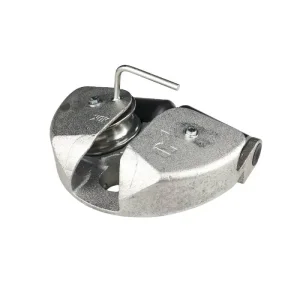
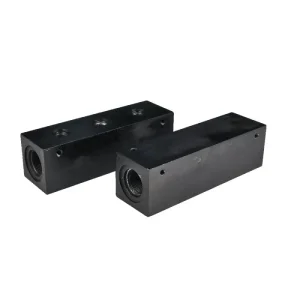
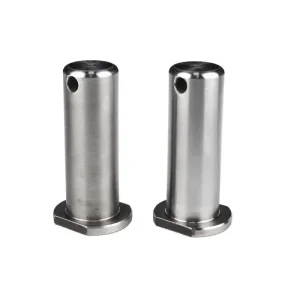
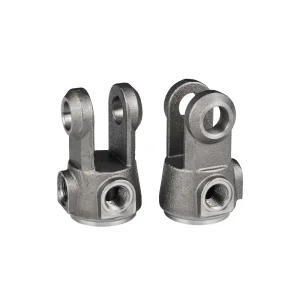
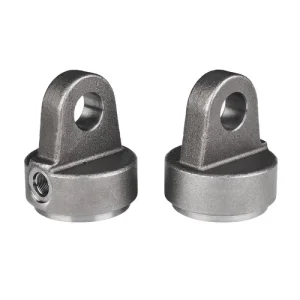
In modern industrial engineering, molding molds function as the primary structural matrix for mass production. From high-pressure automotive castings to complex oil pipeline fittings, the dimensional integrity, mechanical longevity, and thermal endurance of the tooling directly determine downstream yield rates. Today's global market demands mold solutions that merge extreme precision with structural durability, calling for advanced alloy selections like H13 tool steel, D2 steel, and LCC alloy variants.
"Without precision mold tooling, modern industrial manufacturing ceases to exist. High-performance casting molds allow for the creation of components with internal geometry channels that would be impossible or prohibitively expensive to machine from solid billets."
Industrial molding technologies have branched into specialized routes: high-pressure die casting, silica sol investment mold processes, and custom metal mold casting. Each route has distinct challenges regarding cooling line configuration, thermal expansion coefficients, and gate geometries. As global industries push toward lightweight designs and complex microstructures, mold manufacturers are challenged to achieve tolerances tighter than ±0.02mm, while ensuring a mold cycle life spanning hundreds of thousands of operations.
The concentration of tooling and casting industries in industrial clusters like Ningbo offers exceptional supply-chain advantages. China molding factories are integrated hubs housing material sourcing, toolpath engineering, thermal treatment, precision machining, and non-destructive quality testing within a single ecosystem. This proximity optimizes production speed and lowers raw material shipping times.
Additionally, Chinese manufacturers offer sophisticated Design-for-Manufacturability (DFM) support. Engineers use finite element analysis (FEA) to simulate metal flow patterns, identifying issues like air entrapment, cold shuts, and high-stress points before tooling steel is cut. Combined with lower operational overheads, this enables rapid tooling prototyping within 7 to 12 days, speeding up product launch cycles for global companies.


Ningbo Yinzhou Haochu Machinery Manufacturing Co., Ltd. is a modern manufacturing enterprise specializing in the research, production, and service of casting and forging technologies. Driven by innovation, the company is committed to delivering high-precision machining solutions for industries such as automotive parts, agricultural machinery, valves, and industrial automation.
Our competitive edge rests on three core capabilities: a skilled team where technical staff make up 30% of the workforce, alongside 10 senior inspectors ensuring a 99.5%+ qualification rate through end-to-end quality control; 40 modern machines, including CNC lathes, machining centers, and coordinate measuring machines (CMMs) driving an annual production capacity exceeding RMB 30M; and an ISO 9001-certified three-tier quality management system that establishes trust with domestic and international partners through reliable delivery and consistent quality.
How HC Machine ensures ultra-reliable tolerances and mechanical specifications for heavy-industry application.
Our facility is equipped with 40 advanced CNC machining systems, automated high-tolerance grinding tools, and surface treatment setups (E-coating/zinc plating), enabling us to target an accuracy threshold of 0.02mm for complex shapes.
Under ISO 9001 parameters, we run a three-level inspection process. Senior inspectors employ Coordinate Measuring Machines (CMM), spectroscopic carbon analysis, and digital surface roughness meters to verify product purity.
We support diverse production requirements, offering quick tool design modifications, silica sol casting pattern optimization, and short runs without long lead times.
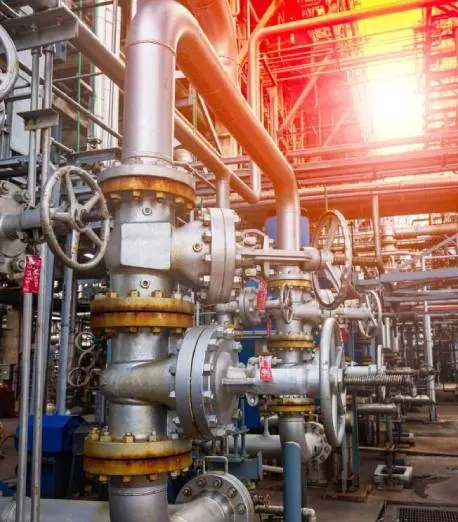
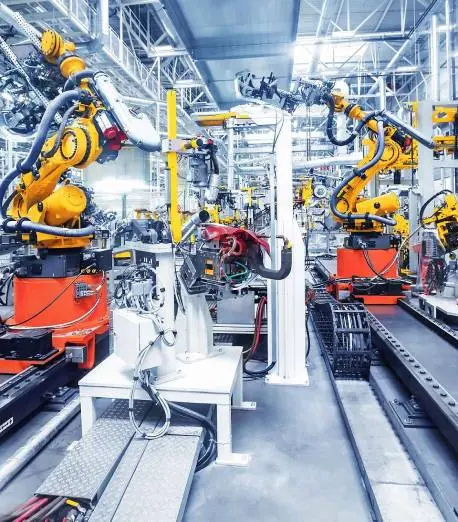
Providing high-reliability solutions across diverse fields including energy transport, heavy agriculture, and precision automotive systems.

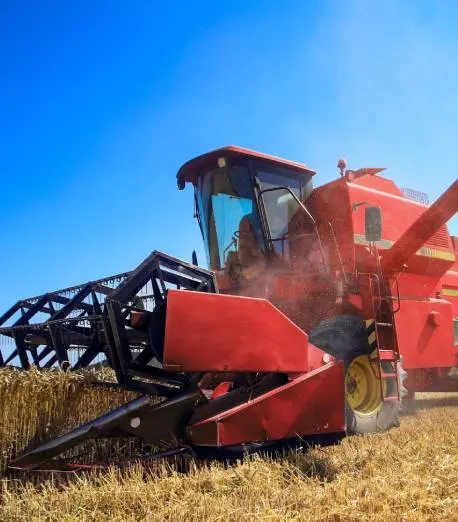
We are committed to becoming a global innovation leader in high-end equipment manufacturing, driving precision engineering with smart technologies and empowering the future of industry through sustainable development. By advancing intelligent, digital, and green technologies, we aim to establish a world-class benchmark in machinery manufacturing that integrates R&D, production, and service.
Guided by our core philosophy of "Precision Crafts Quality, Innovation Defines the Future," we foster efficient industry collaboration and elevate customer value by delivering smarter, more reliable solutions for global industries. Upholding green manufacturing principles, we build a low-carbon, resource-efficient ecosystem, fulfill social responsibilities, support employee growth, and drive community prosperity to achieve our ultimate mission.
Global procurement teams targeting China molding factories must focus on material certification compliance. The chemistry profile of high-temperature casting alloys dictates their long-term strength. For instance, LCC alloy steel requires strict sulfur and phosphorus limits to avoid hot cracking. Our advanced spectroscopy ensures that every batch matches ASTM, DIN, or JIS standards before casting begins.
Furthermore, post-casting thermal treatments, such as tempering, normalizing, and solution annealing, are critical to relieving internal stresses and refining grain structure. This optimization guarantees that machined features (like UNC threads on forged unions or inner cylinder walls) will not warp during field operations.
Essential technical insights for procurement officers and engineering teams sourcing custom molds and castings.
The tooling life depends on the selected mold material and production process. Molds made from high-grade H13 or Cr12MoV tool steel, with proper heat treatment, routinely exceed 200,000 to 500,000 cycles for die casting or injection. Silica sol ceramic molds are single-use per pour, but their master steel patterns are built for high-volume repeatability.
We combine precision equipment with rigorous validation. Primary rough casting is followed by stress-relief annealing. Final shapes are machined on high-precision CNC equipment. These components are then measured in climate-controlled labs using CMM systems calibrated to ISO 9001 standards.
Silica sol casting delivers superior surface finish quality (typically Ra 3.2 to 6.3 microns) and tighter dimensional tolerances. It avoids the surface decarbonization issues common with water glass processes. While silica sol has a higher initial tooling cost, it significantly reduces the need for secondary machining, making it cost-effective for complex components.
For severe outdoor environments, we recommend a combination of zinc plating (for sacrificial anodic protection) and E-coating (electrophoretic painting, which creates an even organic barrier over complex geometries). We also offer phosphating treatments for forged steel oil and pipeline fittings.
Yes. Our engineering division is optimized for flexible scheduling. We accept small-batch custom mold orders, offering prototype tool testing and quick proofing cycles within 7-12 days to help customers validate their designs before scaling up.
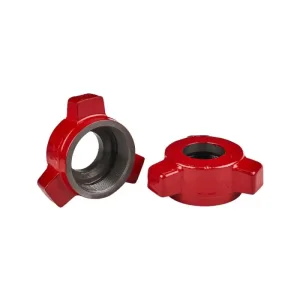
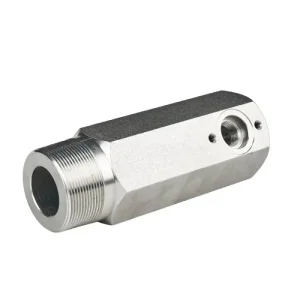
A selection of our popular components distributed to industrial buyers worldwide.
 Haochu Machinery