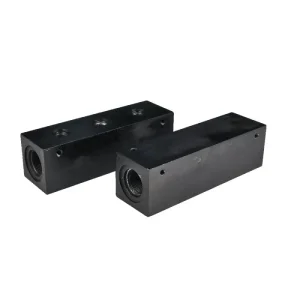
Explore our certified range of high-tolerance metal castings, forged steel fittings, and precision CNC components manufactured under ISO 9001 quality frameworks.
Ningbo Yinzhou Haochu Machinery Manufacturing Co., Ltd. (established in 2013) is a modern manufacturing enterprise specializing in the research, production, and service of casting and forging technologies. Driven by innovation, the company is committed to delivering high-precision machining solutions for industries such as automotive parts, agricultural machinery, valves, and industrial automation.
We provide deep integration of metallurgical engineering, raw casting execution, precision multi-axis CNC finishing, and extensive surface treatment. Under the brand HC MACHINE, we offer direct industrial sourcing with a steadfast commitment to technological progression, robust supply chain resilience, and international engineering standards.

Our production capabilities bridge modern metallurgy and advanced machinery to fulfill demanding structural metrics. Our foundational strength is supported by three primary pillars:
Our skilled team features 30% technical staff and 10 senior inspectors ensuring a 99.5%+ product qualification rate. We utilize end-to-end quality control workflows spanning microstructural analysis, thermal simulations, and optical dimensional evaluations to prevent metallurgical flaws.
Equipped with 40 modern machines, including precision CNC lathes, multi-axis vertical machining centers, and coordinate measuring machines (CMM). Our infrastructure handles high-precision output to sustain an annual manufacturing capacity exceeding RMB 30M.
Our facilities follow an ISO 9001 certified three-tier quality verification system. This guarantees total compliance from initial raw chemical analysis through casting stage inspections to final dimensional tolerance checks, earning the trust of international OEMs.
Die casting represents a pivotal metal manufacturing technology, injecting molten metallic alloys under extreme pressure into reusable steel molds. At HC MACHINE, our technical strategy merges thermodynamic control, flow modeling, and multi-axis finishing to produce cast parts with structural integrity and dimensional consistency.
Depending on the application, we deploy specialized casting methods to balance dimensional accuracy, wall thickness, and mechanical properties:
Porosity is a major risk in high-pressure processes, caused by gas entrapment or solidification shrinkage. We address this using advanced gating design and computer simulations:
By simulating molten metal flow, we optimize gate placement, overflow wells, and venting channels to maintain a laminar flow front. For structural parts, vacuum-assisted die casting reduces gas content. We also use nitrogen degasification processes in the holding furnace to remove hydrogen from aluminum melts before injection.
Raw castings are rarely complete right out of the mold. Our integrated facility bridges the gap between casting and final assembly with high-tolerance machining and protection:
Using multi-axis CNC centers, we achieve tolerances down to 0.02mm on critical sealing faces, thread assemblies, and bearing fits. We offer surface treatments like electrodeposition coating (E-coating), zinc plating with trivalent passivation, and shot blasting to optimize corrosion resistance and prepare surfaces for demanding environments.
Below are specialized component solutions designed for high-stress hydraulic, mechanical, and agricultural applications.
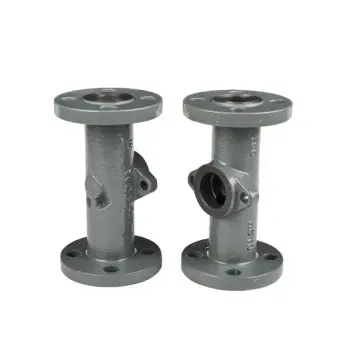
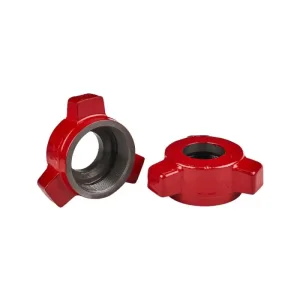
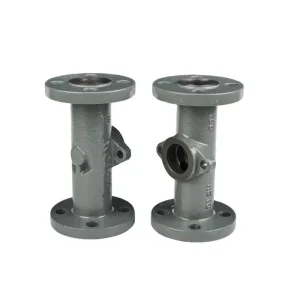
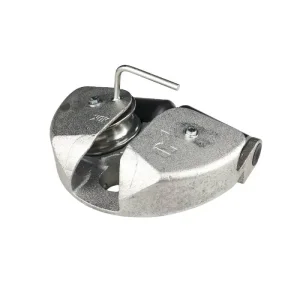
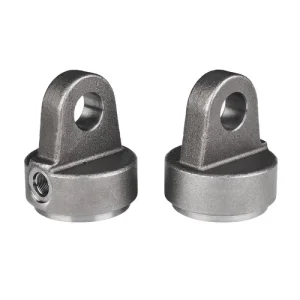
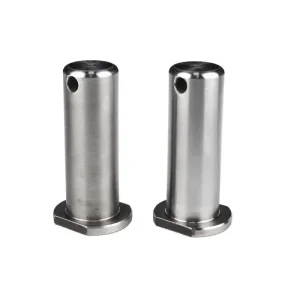
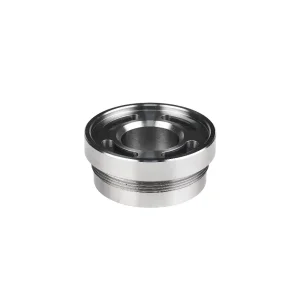
Cast from LCC alloy steel for low-temperature toughness, pressure retention, and structural durability.
Contact Engineering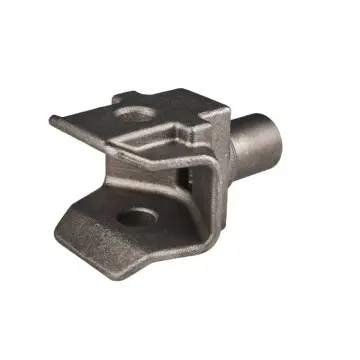
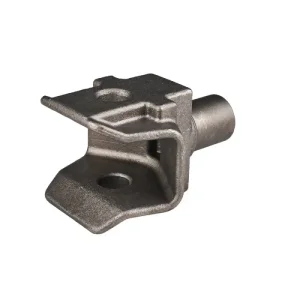
Heavy-duty cast components designed for agricultural machinery, optimized for wear resistance.
Contact Engineering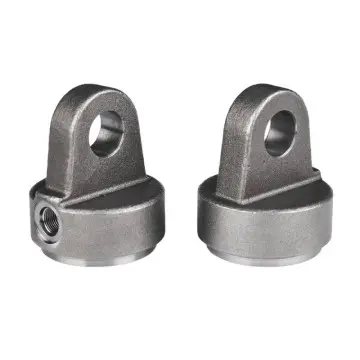
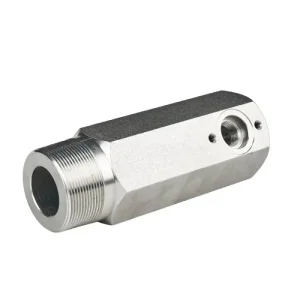
Investment cast components utilizing silica sol binders to achieve tight dimensional tolerances.
Contact EngineeringOur custom castings and precision-machined forgings provide structural reliability across critical global industries:
We manufacture lightweight engine blocks, gearbox housings, brackets, and structural components. By integrating composite casting with high-tolerance grinding and anti-wear E-coatings, we support the automotive sector's efforts to reduce weight and extend service life.
Our high-performance LCC alloy steel oil valves and pipeline unions (featuring precision-machined 2 UNC threads) are engineered for reliable service in high-pressure, corrosive, and low-temperature environments.
Heavy-duty tractor accessories, brackets, and structural suspension components are cast from high-strength alloy steels and 6061 aluminum, providing high mechanical strength and impact resistance under demanding agricultural operating conditions.
Procuring custom components internationally requires managing challenges beyond dimensional accuracy. Global buyers need supplier transparency, consistent quality, and reliable logistics. We address these procurement needs through robust supply chain processes:
Each production batch undergoes spectrometer testing to verify chemical composition, alongside mechanical testing for tensile strength, yield strength, and elongation. We provide standard material test reports (MTRs) and EN 10204 3.1 certificates with every delivery to ensure full traceability.
We partner with reliable raw material suppliers to buffer against market price fluctuations and maintain material availability. Our production scheduling utilizes MRP software to coordinate raw casting, machining, and surface treatments, helping us meet lead times for global OEMs.
We serve international markets by matching standard specifications and regulatory frameworks across key manufacturing regions:
| Standard Group | Target Region | Material Equivalents | Application Focus |
|---|---|---|---|
| ASTM / AISI | North America | A352 LCC, 6061 Al, 1045 Steel | Pressure vessels, oil fittings, general structural components |
| EN / DIN | European Union | G20Mn5, C45, AlSi10Mg | Automotive structural parts, industrial equipment, safety valves |
| JIS | Asia-Pacific | SCW410, S45C, ADC12 | Agricultural equipment parts, precision engine brackets |
Our compliance commitments extend beyond metallurgy. We adhere to REACH and RoHS regulations for surface plating and anti-rust coatings. Additionally, we provide custom logistics support, offering rust-preventative coatings (VCI packaging) and fumigated wooden crates to protect parts during transoceanic shipping.
The metal casting sector continues to adapt to new manufacturing standards and technologies. At HC MACHINE, our technical development is guided by these key trends:
Integrating artificial intelligence with thermodynamic modeling helps us predict hot spots, air pocket risks, and shrinkage cracks before tooling begins. This reduces prototyping cycles and improves material yield.
As clean energy systems and electric vehicles require lighter structures, we are developing vacuum-assisted casting methods. This enables thin-wall aluminum castings that maintain high mechanical strength.
We are optimizing energy efficiency in our melting operations, using closed-loop recycling for run-off metals, and adopting eco-friendly chemical binders to help minimize the environmental footprint of our castings.
"Precision Crafts Quality, Innovation Defines the Future" – We are committed to becoming an international innovation leader in custom metal casting. By combining smart technologies and sustainable operations, we support global engineering projects with reliable, high-performance mechanical parts.
HC MACHINE: China's Engineered High Precision Casting Partner
Detailed answers to technical questions commonly raised by procurement managers, metallurgical engineers, and quality assurance leads:
Compare our specialized components for custom automotive, pipeline, and machinery setups:
 Haochu Machinery