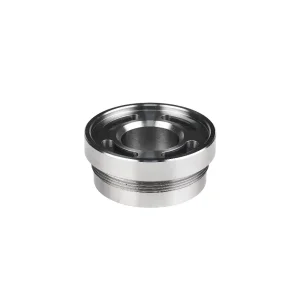
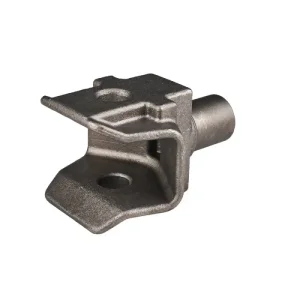
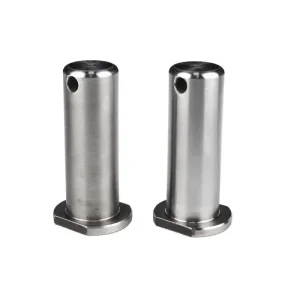
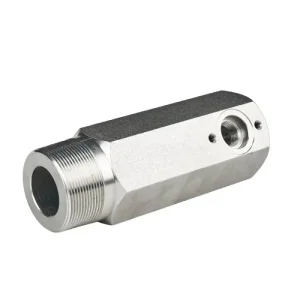
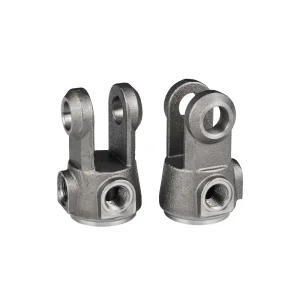
The global industrial landscape is undergoing a seismic shift. As industries ranging from aerospace to automotive transition toward Industry 4.0, the demand for wholesale machining metal parts has evolved from simple transactional procurement to high-stakes strategic partnerships. Today’s procurement directors aren't just looking for "suppliers"—they are seeking integrated "manufacturing ecosystems" that can provide information gain, design optimization, and supply chain resilience.
While "nearshoring" is a buzzword in Western markets, the concentration of supply chain depth in China remains unparalleled. Factories like Ningbo Yinzhou Haochu Machinery Manufacturing Co., Ltd. (est. 2013) demonstrate why the Yangtze River Delta remains the global heart of precision engineering. The "Cluster Effect" allows for immediate access to raw materials, specialized heat treatment facilities, and advanced surface coating technologies within a 50-mile radius.
Ningbo Yinzhou Haochu excels through a skilled team with 30% technical staff and 10 senior inspectors. Our ISO 9001-certified three-tier inspection system ensures 99.5%+ product qualification via end-to-end quality control from raw material to final shipment.
Equipped with 40 modern machines, including CNC lathes, multi-axis machining centers, and Coordinate Measuring Machines (CMM). This infrastructure enables an annual capacity exceeding RMB 30M, catering to high-tolerance requirements.
Driven by innovation, we are committed to becoming a global leader in high-end equipment manufacturing. By advancing intelligent, digital, and green technologies, we empower the future of industries like automotive, agriculture, and oil valves.
With the shift to EVs, weight reduction is critical. Our CNC machined 45# steel and alloy components provide the strength-to-weight ratio required for modern suspension systems and drivetrain housings. High-tolerance grinding ensures the silent operation expected in high-end automotive assemblies.
Modern farming requires durability under extreme environmental stress. Our precision casting tractor accessories and 6061 aluminum components are treated with anti-rust zinc plating, ensuring longevity in high-moisture and corrosive soil environments.
Safety is non-negotiable in fluid control. Our silica sol casting parts for LCC alloy steel oil valves undergo rigorous pressure testing to ensure leak-proof performance in hazardous pipeline environments.
1. Material Science Innovation: We are seeing a shift toward "super-alloys" and composite casting solutions. Our R&D team is currently focusing on high-performance LCC steel that maintains structural integrity at cryogenic temperatures.
2. Digital Twin Integration: The move from CAD to Digital Twin allows for predictive maintenance of machined parts. By providing detailed inspection data for every batch, we help our clients build digital replicas of their machinery for better performance monitoring.
3. Sustainability (Green Machining): Reducing carbon footprints is now a procurement requirement. Haochu is implementing resource-efficient ecosystems, recycling metal shavings, and utilizing eco-friendly e-coating processes.

As a leading China Customized High Precision Casting Manufacturer, we offer:
For standard prototyping, we offer a 7-12 day fast-proofing cycle. Mass production typically ranges from 3-5 weeks depending on geometry complexity and surface treatment requirements like zinc plating or e-coating.
Silica Sol casting provides superior surface finish (Ra 3.2-6.3) and tighter dimensional tolerances (CT4-CT6), making it ideal for thin-walled parts and high-pressure applications like oil valves compared to water glass methods.
We provide full chemical composition analysis and physical property reports for every batch. Each shipment is accompanied by a MTR (Material Test Report) and 3.1 certification upon request, ensuring compliance with international automotive standards.
Yes. By integrating both foundry operations and a modern CNC machining center, we eliminate "middle-man" logistical risks, reduce cumulative tolerances, and provide a single point of accountability for quality.
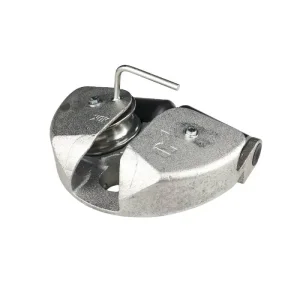
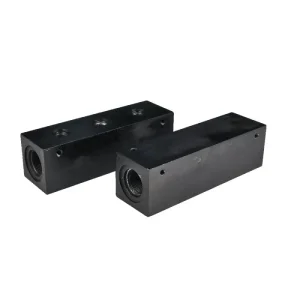
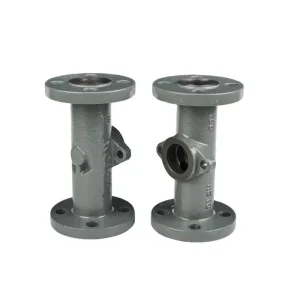
 Haochu Machinery