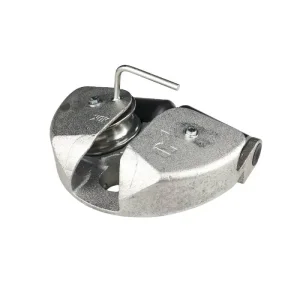
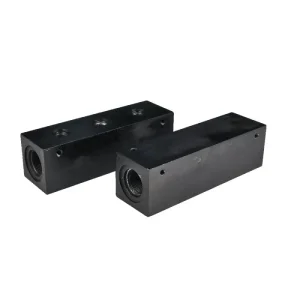
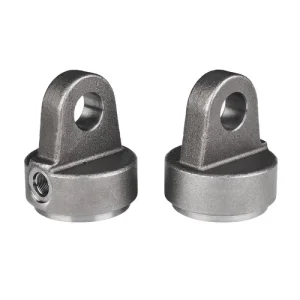
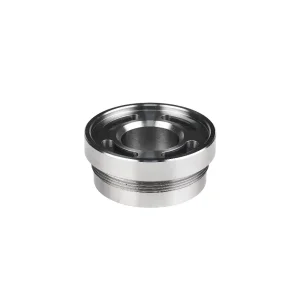
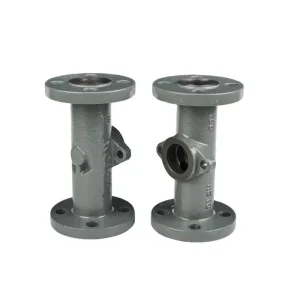
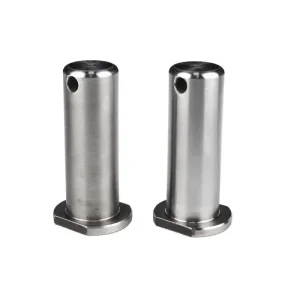
Wholesale Machining Prototypes Manufacturer & Factories

Precision Engineering, Investment Casting & High-Tolerance CNC Prototyping Solutions for Global Industrial OEM/ODM Supply Chains

Development Trends in Machining Prototypes Industry

Understanding the transition from subtractive prototyping to multi-axis complex manufacturing and materials science.

The global manufacturing landscape is undergoing a critical transition. High-precision mechanical prototyping is no longer merely a quick physical check of a component’s basic envelope; it has evolved into the cornerstone of functional validation, material verification, and lean production setup. Modern machining prototype factories are leveraging 5-axis synchronous milling, sub-micron electro-discharge machining (EDM), and high-vacuum investment casting to deliver components that behave exactly like production-run hardware.
Key industry dynamics indicate a soaring demand for functional hybrid prototypes, combining the rapid design iterations of 3D printing with the exact structural integrity, surface finish, and mechanical properties achieved through advanced CNC milling. Material optimization is another major trend. Designers are looking beyond basic mild steels and standard aluminums toward highly tailored material alloys such as LCC alloy steel, agricultural-grade 6061 aluminum, and high-performance 45# carbon steel. Ensuring that raw materials have zero internal porosity—particularly in pressure-retaining components like valves and pipeline fittings—requires cutting-edge casting techniques combined with strict machining processes.

Semantic Value Note: Shift to Real-time Verification

By producing functional prototypes utilizing the actual end-use manufacturing processes (e.g. Silica Sol investment casting + CNC finish-machining), global manufacturers bypass secondary validation cycles, reducing time-to-market from months to days.

High-Precision Machining Limits

Iterating prototype manufacturing with tolerances down to ±0.02mm, ensuring mechanical fitment and exact replication of high-volume manufacturing designs.

Advanced Surface Treat

Application of chemical conversion coatings, specialized zinc plating anti-rust coatings, e-coating, and high-tolerance grinding for components under harsh environments.

Metallurgical Integrity

Utilizing high-end silica sol casting and forging lines, eliminating internal defects so prototypes handle full physical stresses without failures.

About HAO CHU Machinery

Ningbo Yinzhou Haochu Machinery Manufacturing Co., Ltd. (established in 2013) is a modern manufacturing enterprise specializing in the research, production, and service of casting and forging technologies.

Driven by innovation, the company is committed to delivering high-precision machining solutions for industries such as automotive parts, agricultural machinery, valves, and industrial automation. We bridge the gap between initial design visualization and final serial production by providing exceptional custom-machined prototypes.
Operating from our ISO 9001 certified manufacturing facility in Ningbo, we utilize a workforce featuring a 30% dedicated technical team and 10 senior quality inspectors. Our structured operational model ensures that from first sample to high-volume output, accuracy, structural soundness, and surface condition are consistently verified.
Ningbo Yinzhou Haochu Machinery Manufacturing Facility

Proven Engineering Competencies & Capacity

Empowering your development cycle through advanced toolmaking and precision manufacturing statistics.

±0.02mm Machining Accuracy
99.5%+ Qualification Rate
7-12 Days Fast Proofing Time
98% Client Repurchase Rate
Our facility hosts 40 modern machining units, including multi-axis CNC machining centers, high-performance lathes, and precise Coordinate Measuring Machines (CMM) for geometrical inspection. With an annual manufacturing capacity exceeding RMB 30 Million, we serve domestic and global enterprises seeking flawless custom structural prototypes.

Navigating Global Procurement Requirements

How purchasing directors and OEM engineers secure reliable prototyping pipelines while minimizing structural risks.

For global procurement specialists in the automotive, oil and gas, and aerospace industries, sourcing machined prototypes involves substantial risk mitigation. Sourcing challenges typically center around dimensional accuracy, mechanical performance mismatch, and delayed engineering validation. A prototype that fails to perform dynamically can stall multi-million-dollar R&D projects.
Therefore, procurement protocols require factories that offer comprehensive traceability. From the raw ingot phase to the final CNC machining operations, every step must be tracked. Partnering with a manufacturer equipped to provide complete spectroscopic chemical composition analysis, ultrasonic or non-destructive defect testing, and comprehensive dimensional measurement reports is crucial for cross-border engineering approvals.

Key Procurement Checkpoints:

Material Authenticity: Direct certification of chemical components (e.g., LCC Steel, ASTM standards, 6061 Aluminum verification).
Surface Treatment Compatibility: Zinc plating thickness verification, salt-spray chamber testing documentation for anti-rust protection, and e-coating uniformity checks.

Macro Industrial Solutions & Applications

Bridging material science and mechanical custom prototype production across demanding industrial sectors.

Automotive Precision Components

Custom structural prototypes including gearbox shells, suspension arms, and critical composite casting parts. Designed to withstand dynamic stresses while adhering to rigid weight optimization constraints.

Oil & Gas Flow Control Systems

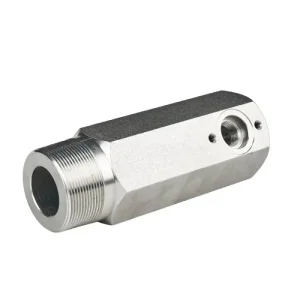
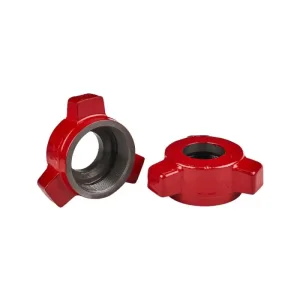
Forged steel unions, high-pressure pipeline fittings, and leak-proof LCC alloy steel valves. Machined with specialized threads (such as 2" UNC) and anti-corrosive properties for high-pressure service conditions.

Agricultural & Heavy Duty Systems

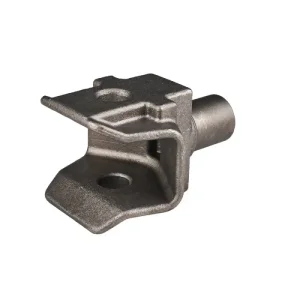
Tractor accessories, linkages, and high-strength 6061 aluminum frame components. Combining investment silica sol casting with CNC finish machining to ensure durability under harsh environmental exposure.

Technical Roadmap: The Next Generation of Machining

How smart automation, tool wear analytics, and low-carbon metallurgical processes shape the future of prototyping.

The future of custom machining and rapid toolmaking lies in intelligent integration. At HAO CHU Machinery, we are systematically updating our production processes. Our engineering roadmap leverages predictive digital layouts where design files interface directly with CAM programming networks to analyze tool pathways, minimizing structural deformation.
Concurrently, green manufacturing demands have prompted us to refine our material recycling loops. When cutting complex 6061 aluminum or high-grade alloy steel components, all machining chips are systematically captured, sorted, and routed back to sustainable metal refinement channels. In addition, our eco-friendly zinc-plating processes and water-based anti-rust treatments meet stringent global Environmental Protection Standards, including REACH and RoHS.

Industrial Machining & Casting Solutions Q&A

Clear, authoritative technical answers addressing key sourcing questions for development engineers.

What structural tolerances can your factory maintain for CNC machined prototypes?

Our CNC machining centers regularly produce prototypes with standard tolerances of ±0.02 mm (and down to ±0.01 mm for specific critical features). We verify these tight tolerances using high-resolution CMM (Coordinate Measuring Machines) and optical micro-comparators, delivering complete dimensional inspection reports with every delivery.

How does Silica Sol casting compare to Sand casting for high-pressure valve parts?

Silica Sol casting provides far superior surface finish (typically Ra 3.2 to 6.3 microns) and tighter dimensional control compared to sand casting. More importantly, investment silica sol casting eliminates the risk of internal micro-voids and sand inclusion, which is critical for pressurized fluid control systems like our LCC Alloy Steel Oil Valves.

Which anti-rust coatings do you offer for custom outdoor industrial steel components?

We provide advanced surface passivation solutions, including zinc-plating with anti-rust conversion treatments, electrophoretic deposition (E-Coating), and specialized powder coatings. Our zinc-plated finishes undergo rigorous salt-spray testing to confirm outstanding corrosion resistance under demanding field conditions.

What materials do you support for agricultural machinery prototypes?

We work with high-strength structural alloys, including 6061 and 7075 aluminum, medium-carbon steels like 45# steel, and specialized alloy steels. These materials ensure that the prototypes can withstand the heavy impact loads, vibration, and abrasive exposure typical of agricultural machinery operation.

What is the standard turnaround time for producing custom-molded castings?

Our standard turnaround for tooling preparation and initial prototype proofing is 7 to 12 days. This rapid prototyping window supports multi-size and multi-process sampling concurrently, helping engineering teams execute structural testing without disrupting development schedules.

How does Ningbo Haochu Machinery guarantee product quality for global OEM projects?

We run a rigorous, ISO 9001 certified three-tier inspection system. This includes initial raw material testing via optical emission spectrometers, in-process inspection at individual machining stations, and 100% final dimensional inspections by our senior quality team before packaging and delivery.